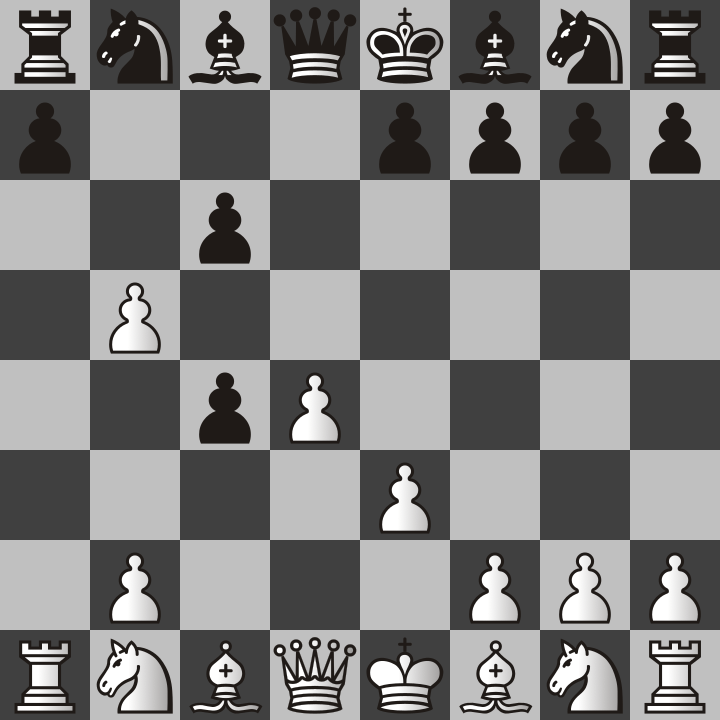
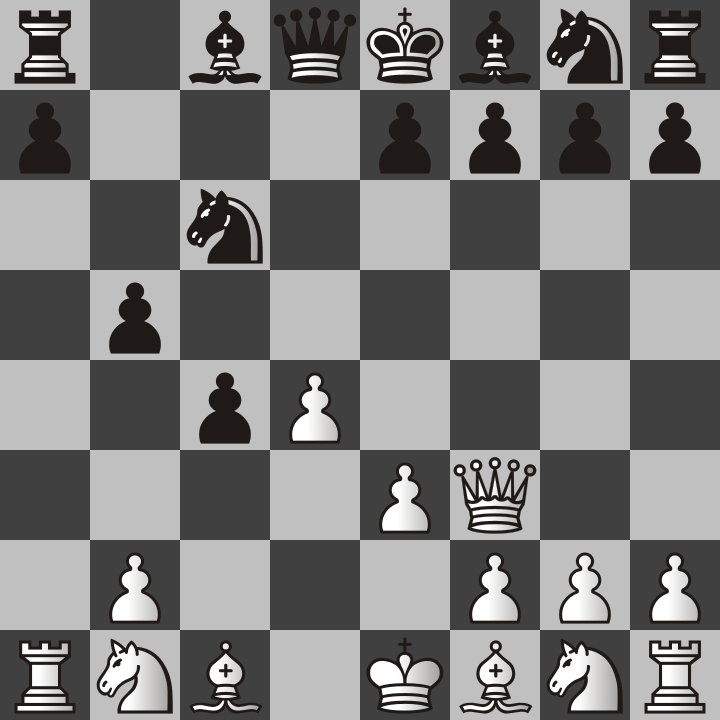
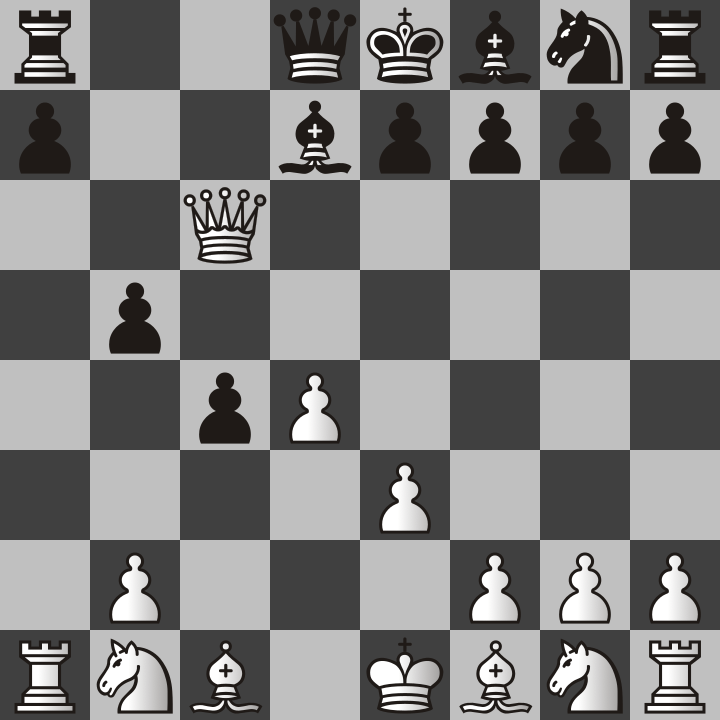
Tag: fantasy

  • The Albin Counter Gambit

    There is a response that black can use against white’s queen’s gambit. The result is that black can take white’s queen if they make two critical mistakes,

    I have pictures of the most common sequence of moves here. I will explain the ideas behind the Albin Counter Gambit and why it can be used to turn the tables against white and destroy their queen. They can of course avoid the trap in a few ways, but this opening is psychologically very tricky.

    First, we are in the Queen’s Gambit position. White offers a free pawn on c4 to tempt black into taking it. I have previously covered why you should not accept the gambit pawn. Those who are playing black can use the following tricks.

    Instead of taking the pawn, or using the common declines of moving a pawn to e6 or c6, black instead moves their king’s pawn two squares to e5. This is a counter gambit because now white will think “Yay, a free pawn!”. Usually they will take it without question.
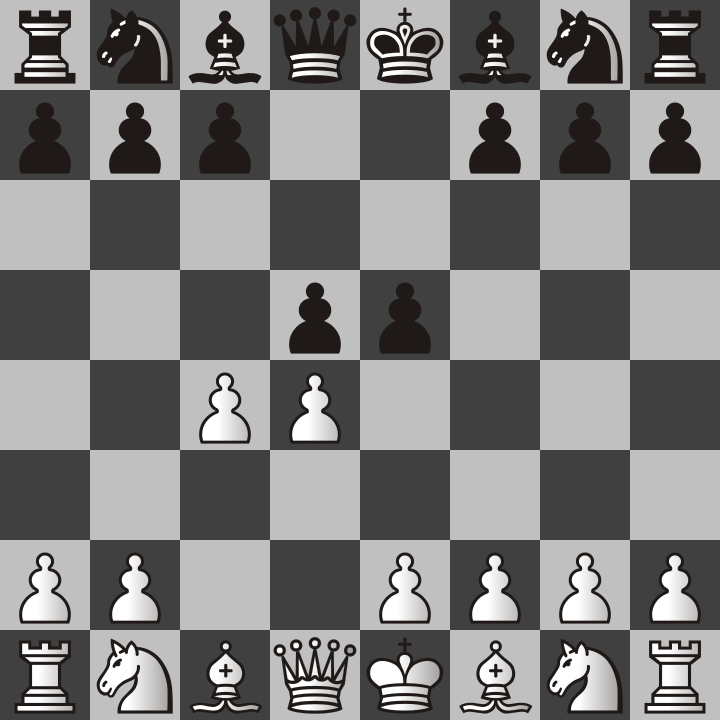
    White takes the pawn. There is no reason not to because it really is a good move. However, white will be overconfident at this point, thinking they are playing someone who doesn’t know what they are doing.

    Black moves the d5 pawn one square forward to d4 where white’s pawn was before. This doesn’t look like a problem except that it means white cannot move their knight to c3 or the pawn will take it.

    White will probably try to advance their king’s pawn to e3 with the idea of trading queens if the black pawn captures it.

    Black now moves the bishop to b4 and puts the king in check. White has 4 options here, not a single one of which is any good. Either they move the king out of the way to e2 and block their bishop, or they put their knight, bishop, or queen in the way on d2 to block the check.
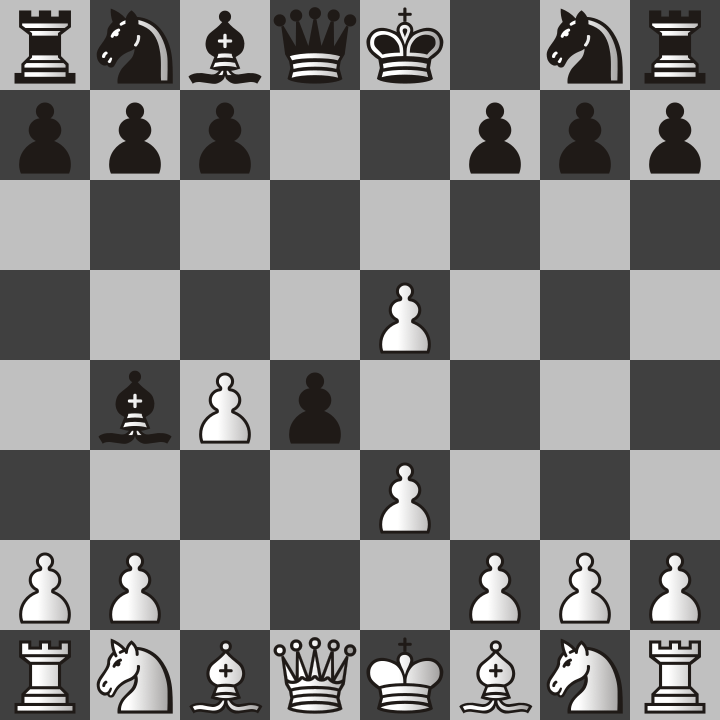
    Not wanting to sacrifice a knight, white sacrifices the bishop on d2.
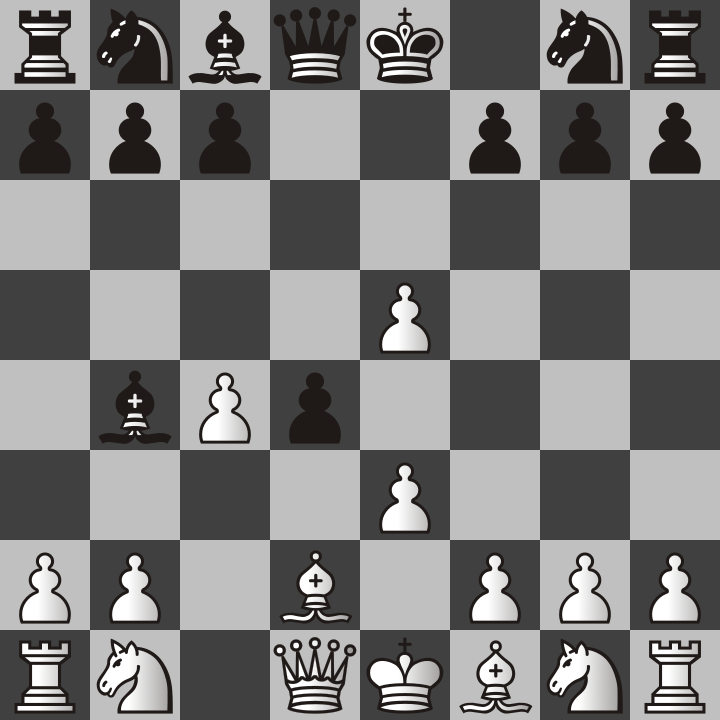
    But black never intended to capture anything with the bishop. They check was just a distraction from the d4 pawn which now takes the e3 pawn. Now it attacks the bishop and pawn. Also, the white bishop on d2 is not able to capture that pawn because then the king will be in check again.
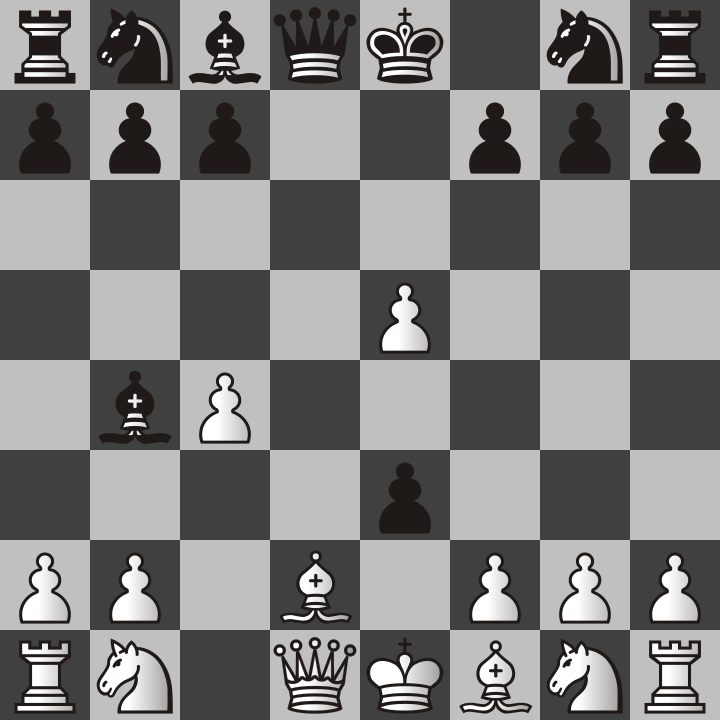
    The white bishop simply takes the black bishop and thinks they are winning the game already.
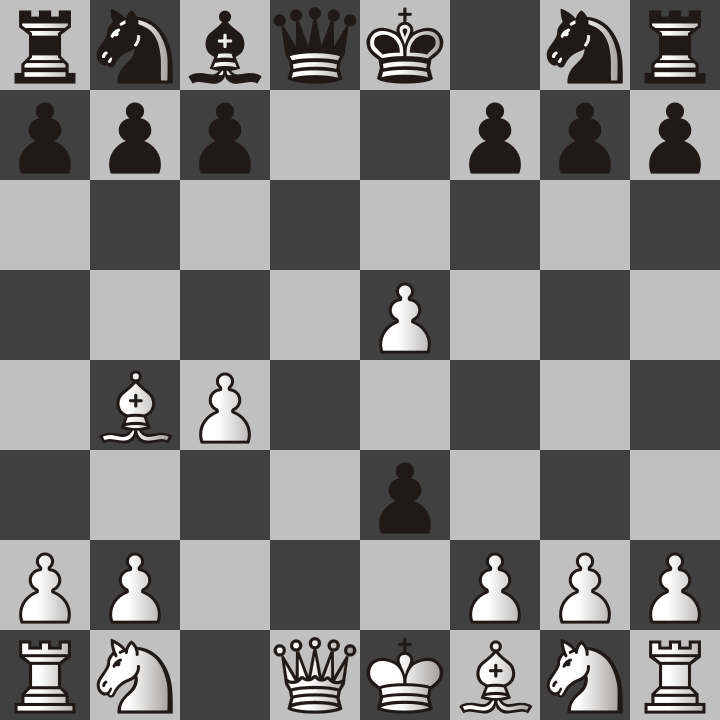
    But then the black pawn captures the f2 pawn and the king is in check. There are two legal moves here, both of which are losing for white. Either they move the king to e2 and let the pawn kill their knight, or they take the pawn, which seems like the logical option.
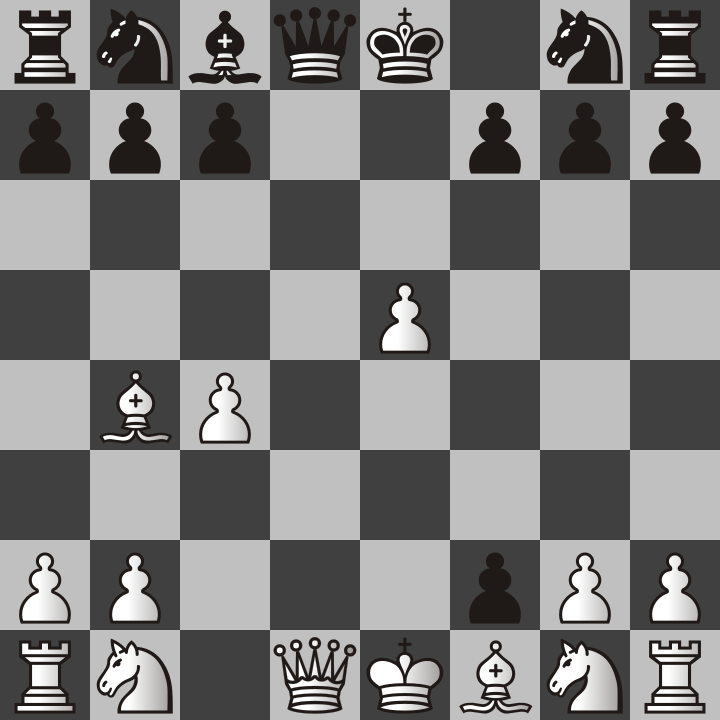
    The white king takes the pawn and yet fails to notice that nothing is defending their queen.

    Black queen takes white queen because when the white bishop moved out of the way, they had no obstacles between them.
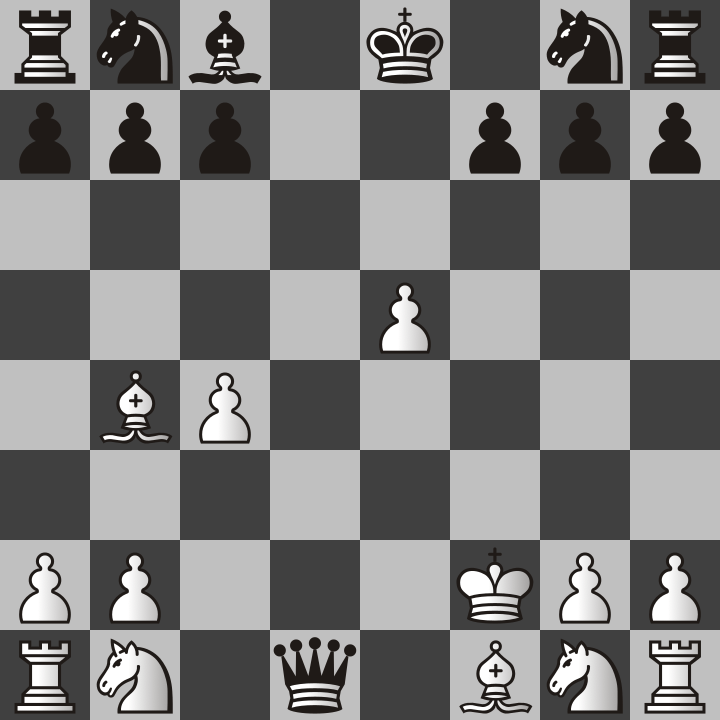
    At this point, white usually resigns after losing their queen. There really are no good moves for white in this position and the black queen can keep putting the white king in check while taking all their pieces. This is why the Albin Counter Gambit is so dangerous to a Queen’s Gambit player like me. Don’t fall for this trap as I once did!

    But you may wonder, can the Queen be protected if the white king moves to e3 instead of taking the pawn on f2?

    No, because remember that the pawn can promote to any piece, including a knight when it promotes. This puts the king in check.
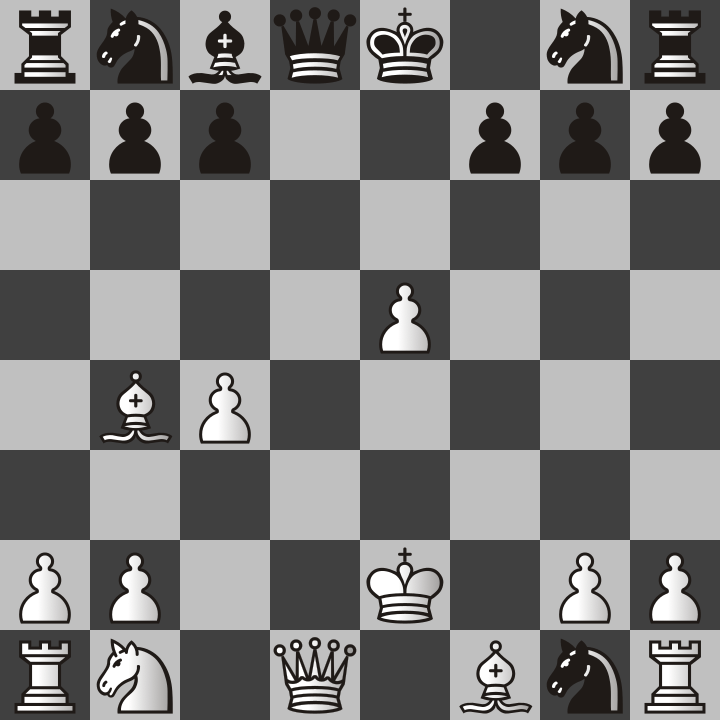
    Of course, the rook can take this black knight, but that will not help the situation at all.
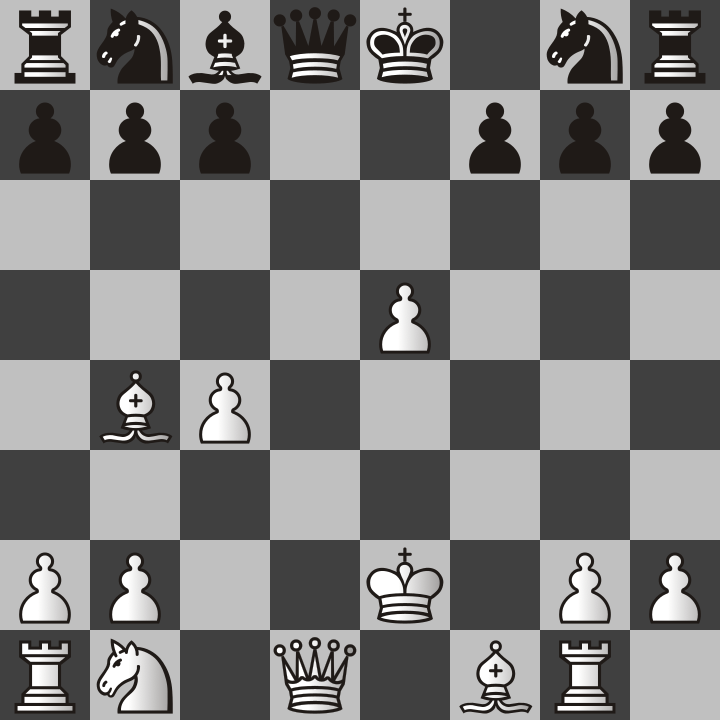
    The true purpose of taking that knight was to remove the final defender of the king from a bishop on b4 check.

    As you can see, there is no way to protect the queen. As soon as the king moves to one of the 3 legal squares, the white queen will be captured by either the black bishop or queen.

    The Albin Counter Gambit doesn’t always go this way, but it certainly can. This is why it is a perfectly valid response to the Queen’s Gambit.

  • Queen’s Gambit Accepted White Pawn to e3

    Daily writing prompt
    Describe a decision you made in the past that helped you learn or grow.

    When I made the decision to move my king’s pawn to e3 after black accepted the Queen’s Gambit. I learned of a Chess opening trap that led me to prefer pawn to e3 over e4. In this trap, black will lose a knight, bishop, or rook depending on which mistake they make.

    What I learned about this is that even though pawn to e3 blocks the dark squared bishop from getting out past it, the high chance that my opponent will fall into this trap makes it worth it. That bishop also should be kept there to defend the king from diagonal checks in the future.

    If you are the black player, I would recommend against accepting the Queen’s Gambit entirely. It leads to many traps by white. If you do accept it, you will lose your pawn anyway. Don’t waste time with that and instead move out other pawns depending on what pieces you plan to move. Below are the two most common responses to the Queen’s Gambit. The following is my written recommendations black should play instead.

    1. d4 d5 2. c4

    ! Good moves for Black

    • e6 Defend the d5 pawn by moving the king’s pawn to e6. If white decides to capture the d5 pawn black will capture back and then white will still not be able to move their bishop to c4. Playing e6 is called the “Queen’s Gambit Declined”. This is the best move in my opinion because moving this pawn there prevents diagonal attacks on the f7 square even if white does manage to get their bishop or queen lined up there.

    • c6 Although it is less common, c6, known as the “Slav Defense” is another way to decline the gambit. By playing this move, black is hinting at a possible check against the white king by moving the black queen to a5. In any case, this move has the same idea that black will capture back on d5 if white’s c4 pawn takes it. It isn’t bad but

    ? Bad moves for Black

    • dxc4 If black takes this pawn, they can fall into one of many possible traps. It is nearly impossible to prevent white from taking back this pawn with the bishop after moving the e pawn. Also, white now has the option to safely move the e pawn to e4 without it being captured because black no longer has the pawn on d5. If black has played dxc4 here, then they are now in a “Queen’s Gambit Accepted” position. White has the advantage of controlling the center with both their king and queen pawns. Black can still win of course but it will be much harder from here.

    Queen’s Gambit Declined

    d4-d5-c4-e6.png

    1. d4 d5 2. c4 e6

    If black declines the Queen’s Gambit with e6, there are some things white must look out for. First, by moving the e pawn, black allows their dark squared bishop to get out next turn. This can possibly put the king in check and/or pin the knight if it has moved to c3. Therefore, all evaluation of moves should consider this threat.

    ! Good moves for White

    • c5 By advancing the c4 pawn to c5, black is prevented from getting their dark squared bishop out entirely. I recommend this as the best move because now both of black’s bishops are prevented from getting out. They already blocked their light squared bishop on e6 and now our c5 pawn prevents them from moving the dark squared bishop there unless they are prepared to get killed by the d4 pawn in response.

    • a3 is not the most offensive move but it is a nice defensive measure to prevent the dark squared bishop from coming to b4. This move should be done if white wants to safely move their knight to c3.

    • Nf3 Moving the knight to f3 is particularly good in the Queen’s Gambit Declined position because it is safe here and can possibly move to e5 next turn. It also means we have not committed to whether we will move the e pawn one or two squares.

    ? Bad moves for White

    • Nc3 Whatever you do, don’t try moving the knight to c3 on this turn unless you are prepared to lose it! You can move it here later if you wish but not until you have dealt with the threat of black’s dark squared bishop first. There will be some people who disagree with me on this because they think losing a knight to take down a bishop is a fair trade. However, I protect my knights because they are my “Queen Killers” and are often involved in forks later in the end game that my opponents don’t see. If you move the knight to c3 here, the bishop can move to b4 and the knight can’t move because that would put the king in check.

    Slav Defense

    d4-d5-c4-c6.png

    1. d4 d5 2. c4 c6

    I must admit that I have not studied the Slav Defense as much as I have the Queen’s Gambit Declined or Queen’s Gambit Accepted. However, I do have two recommendations for white moves here.

    • Nf3 is a solid move because the knight will certainly be involve in the game at some point and is not under immediate threat.
    • Bf4 is a good idea here because we can target the knight on b8 now that the c pawn is not in the way. We have a lot of options for where the bishop can go from here. It is a safe move at this point with no real downsides. Don’t hesitate to kill the knight with the bishop unless you are player who prefers to keep your bishops alive. There is some matter of preference when it comes to the value of knights vs bishops.

    As I play more games in the Slav defense, I may have more to say here. The Slav Defense has its own merits even though it is not as popular as other responses to the Queen’s Gambit.

    Follow me for More Chess Tips

    I play Chess on Lichess.org almost daily. You can find me as user chastitywhiterose. Send me a challenge for a correspondence game or contact me for setting up a time for some live classical Chess!

    I also stream on Twitch and upload the videos to YouTube also.

  • Chess and Solitaire

    Could there be a connection between Chess and Solitaire? I have never written about this before, but I was obsessed with Solitaire in my teen years. At first it was Klondike, Spider, and Freecell because they were included on Windows XP.

    When I switched to Linux, I looked for open-source versions of it. The PySol Fan Club Edition had the largest collection of Solitaire games I have ever seen.

    But you might be wondering what this has to do with Chess. At the same time that I was playing Solitaire, I was also playing Chess a lot. When I discovered PySol, I was so into the cards that I bought a physical deck and started playing solitaire games and trying to invent my own.

    The fact that I got this far into Solitaire is evidence of my tendency to completely hyper-focus on a special interest. I was even designing new playing cards by editing the SVG files included in PySol. Ironically, this is the only game I designed art for besides Chess.

    But what reminded me of Solitaire recently was actually Raid Shadow Legends. They added Alice from Alice in Wonderland to the game, except they turned her into a Warrior Goth Girl with the Vorpal Sword and the most incredible outfit, which contains the chessboard and the card suits, from the standard playing card decks.

    Both playing cards and Chess are part of the Alice in Wonderland books and their many spinoffs and adaptations. Much like Alice, I, too, am a dreamer who visits a strange place. I have referenced this in some of my blog posts and songs. I have my version of Wonderland.

    I don’t know why but as I look at the chessboard and the designs on the playing cards, I can feel the power of these ancient symbols used for many games. Every piece, card, and rule has its history of how it came to be what it is today. Perhaps this is why people like me have board and card games as special interests and never seem to get tired of it. Some things have become famous all over the world. I wrote something about Alice after I saw her in Raid Shadow Legends. Once again, I had a moment upon seeing the design of her dress that reminded me of the games I love and why they bring me comfort.

    Alice the Wanderer
    
    Alice had no home in the human world. She preferred the nightmares of Wonderland over the nightmares of Earth. She had become stronger than she ever thought possible. She may not be able to win battles on Earth, but she has conquered the battlefield of her mind. She was not sure whether Wonderland was any more or less real than the world that humans called Earth.
    
    She had come to understand that the Mad Hatter was no more mad than she was. As the Cheshire cat had said, we are all mad here. A world of checkerboards and playing cards brought her comfort because it reminded her that life is a game and a game can be won. 
    
    But who sets the rules of the game? Alice was not sure, but she preferred to make her own rules. Alice makes the way and chooses her own path. In any case, it did not matter where she went. Alice was ready for anything, no matter where she was headed. She did not know where she was going, but she would get somewhere if she walked far enough.

  • Chess should end in checkmate

    In this post, I will be sharing something that may be useful to players about the nature and reliability of Chess databases. This is a topic that I am studying deeply as a Chess coach. I will be using the open source program pgn-extract to assist me in sharing some stats about the most well known free database, Caissabase. I downloaded it through En Croissant. I have to say that both of these programs are free and open source. As a rule, I promote free and open source software because I believe that Chess should be free for all and I don’t believe someone needs to spend money on expensive Chess programs for analysis.

    Even in the largest Chess databases, very few games end in a checkmate. Because of this, it is necessary to extract only the ones that do end in checkmate because it is the proper way to win the game. The game ending because somebody ran out of time tells us nothing about the quality of the moves of that game.

    pgn-extract ../BigData/caissabase.pgn -ocheckmates_caissabase.pgn –checkmate

    For example, on my machine, the database called Caissabase is

    3.53 GB (3,791,607,570 bytes)

    After filtering to checkmates only with the previous command, the new size is

    190 MB (199,970,816 bytes)

    The final output of the pgn-extract command above was

    263966 games matched out of 5397923

    The reason I am sharing these stats is because it serves as evidence that most Chess databases suffer from several drawbacks.

    1. Players agree to draws to save time.
    2. Players lose when their clock runs out in time matches, even if they have a completely winning position.
    3. Players simply give up after they have lost their queen and have been known to resign even when there is a chance to win.

    Because of these 3 reasons. I recommend always filtering your reference databases to games ending in checkmates. In fact, aside from the fact that your analysis of games will be more reliable, this method can save a lot of disk space. For this reason, I have replaced Caissabase with the newer copy on my PC because I am sadly running out of space on this laptop. I expect this information will help people save disk space and also to get better data from the databases they use for analyzing games played both by themselves and also the famous Chess masters.