Tag: fiction

  • How The Chandler Caterpillar Evolved into a Chastity Butterfly

    Chastity’s Journey into a career in writing began in 2013 when she published a book titled “Confessions of a Confused Virgin”. This book project was intended to teach Chastity about the process of self-publishing a book so that she could help her mother, Judena Klebs, publish the books she had written.

    However, the people on Facebook enjoyed Chastity’s different points of view on dating, marriage, and sex. After that, Chastity started blogging on a WordPress blog about whatever she had on her mind at the time. Eventually, these small posts became content for future books she would publish.

    The majority of her writing was a series of conversations she had with a unicorn in a dream. The series remains forever published as “Chandler’s Honesty” because Chandler is her legal name even though she is known by her preferred name of Chastity White Rose. Unlike most transgender people, Chastity does not consider Chandler to be a “dead name” but instead a name of historical importance as she evolves from a caterpillar to a butterfly and yet remains the same person.

    butterfly.png

    Chastity is a simple person who prefers playing Tetris or Chess much more than writing. However, she began a project in Pride month of 2025 with a focus on educating the public about the LGBTQIA+ community that is different than the hype you would hear from mainstream media.

    Chastity graduated with a Creative Writing Degree in July of 2025 after attending Full Sail University as an online student while working full-time at Walmart in Lee’s Summit, Missouri.

    Her best paperback books and ebooks can be purchased from Amazon, Apple Books, Google Play books, and many others. These works cover a range of topics, such as opinions on politics or religion, her Journey as an Asexual Transgender woman (Chandler’s Honesty), and even a 100-page book about the board game of Chess (Chastity’s Chess Chapters).

    But beyond writing books and blog posts, Chastity is offering services to help others write and publish their books, blogs, and websites. Those who have a story to tell but who may not be as technologically inclined may benefit from her experience using Kindle Direct Publishing, Draft2Digital, WordPress, and writing content with Markdown and HTML.

    Chastity writes on two main websites that she pays to keep free of ads and distractions.

    You can also follow her author profiles for updates on the latest books she publishes.

  • Technical Writer

    After publishing my first Chess book, Chastity’s Chess Chapters, I have come to realize that what I was accidentally doing is the start of Technical Writing. When I think about the majority of what I have been reading in my lifetime, I discovered it was not story novels. I am much more likely to be reading a book or a PDF manual written for Open Source Software.

    In the process of writing my Chess book, I depended greatly on the Technical Writing of other people. For example

    These three people were extremely influential to what I needed to learn. The Markdown Guide provided me with the knowledge to separate chapters from paragraphs and link to images which I needed to include in my book. It also pointed me to Gabriel’s blog post about using only open source tools to publish a book. His blog post introduced me to Pandoc, which is a perfect complement to using Markdown as described in the Markdown Guide. These 3 unrelated authors of Technical Writing about how to use these Open Source tools all accidentally worked together in helping me include the images in my own book.

    The end result is that my book, Chastity’s Chess Chapters, is a Technical Writing book about how to play the game of Chess, what software and websites can help, and also some about the process of how the book was made. There were a few Pandoc commands included in the book to remind myself how I did the process of making my book files, but also for the purpose of sharing the information to help other authors write whatever books they want and get them published.

    After speaking with Career Coaches Susan Smey and Mary Helen Norris, I am starting to see that a Technical Writer is what I am becoming without even trying. The kind of things that I have been reading and writing have a name. Once you know a name of something, it can be Google searched, and then opportunities are available! I am very excited for what career I may have because of my Full Sail University education and my self taught computer skills.

  • The Albin Counter Gambit

    There is a response that black can use against white’s queen’s gambit. The result is that black can take white’s queen if they make two critical mistakes,

    I have pictures of the most common sequence of moves here. I will explain the ideas behind the Albin Counter Gambit and why it can be used to turn the tables against white and destroy their queen. They can of course avoid the trap in a few ways, but this opening is psychologically very tricky.

    First, we are in the Queen’s Gambit position. White offers a free pawn on c4 to tempt black into taking it. I have previously covered why you should not accept the gambit pawn. Those who are playing black can use the following tricks.

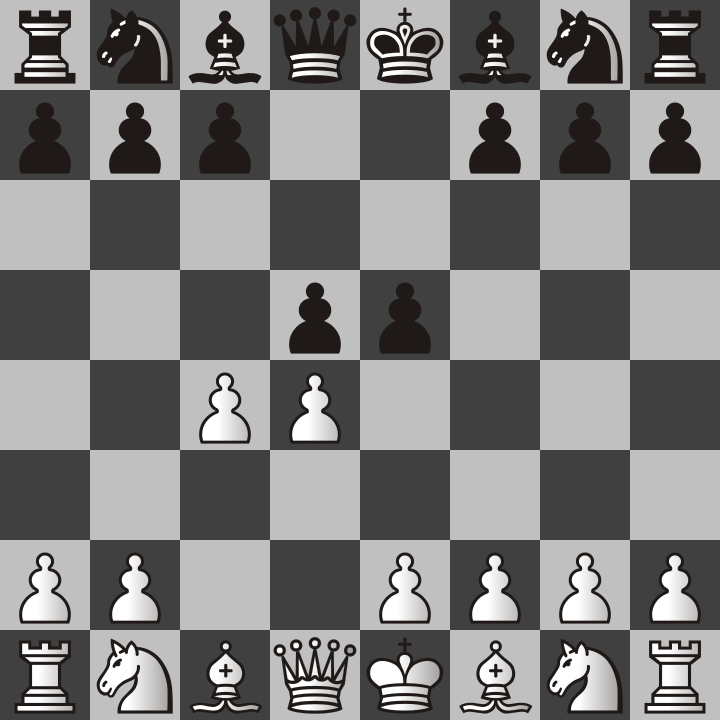
    Instead of taking the pawn, or using the common declines of moving a pawn to e6 or c6, black instead moves their king’s pawn two squares to e5. This is a counter gambit because now white will think “Yay, a free pawn!”. Usually they will take it without question.

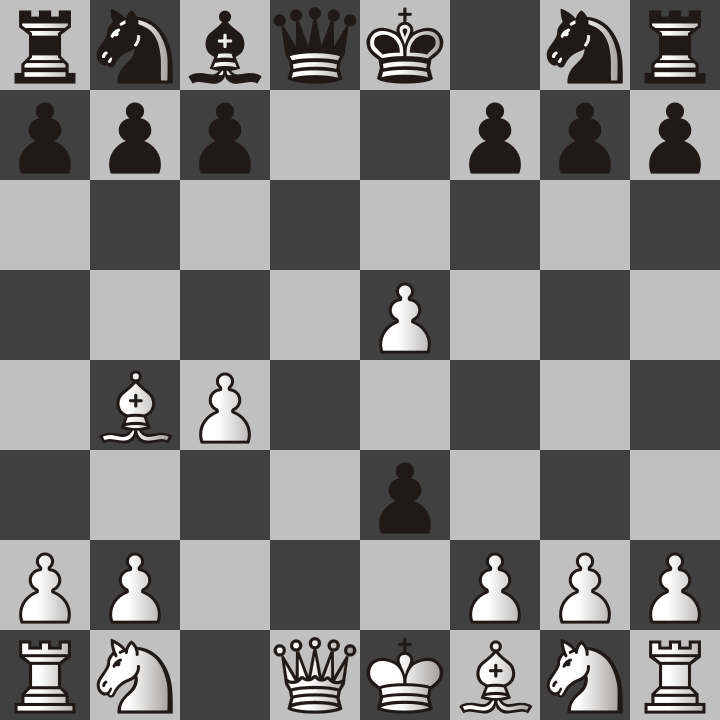
    White takes the pawn. There is no reason not to because it really is a good move. However, white will be overconfident at this point, thinking they are playing someone who doesn’t know what they are doing.

    Black moves the d5 pawn one square forward to d4 where white’s pawn was before. This doesn’t look like a problem except that it means white cannot move their knight to c3 or the pawn will take it.

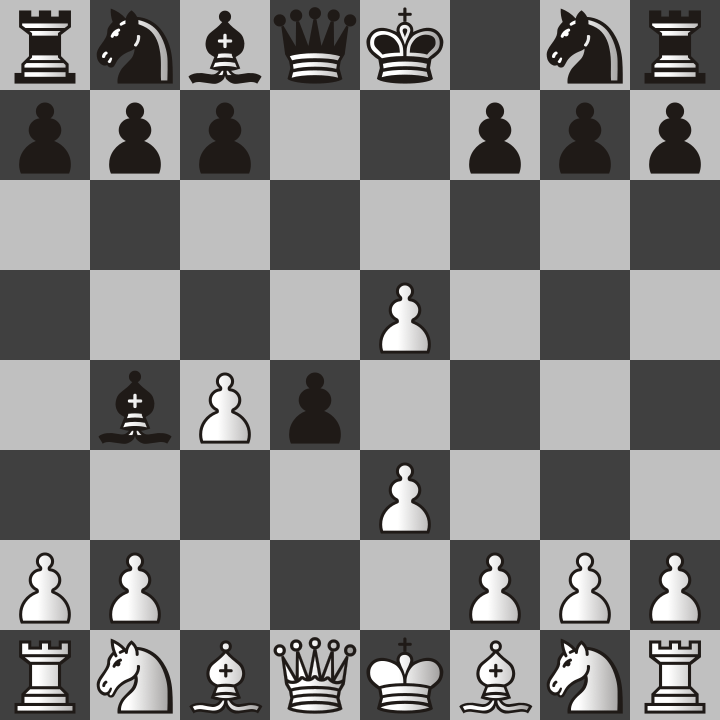
    White will probably try to advance their king’s pawn to e3 with the idea of trading queens if the black pawn captures it.

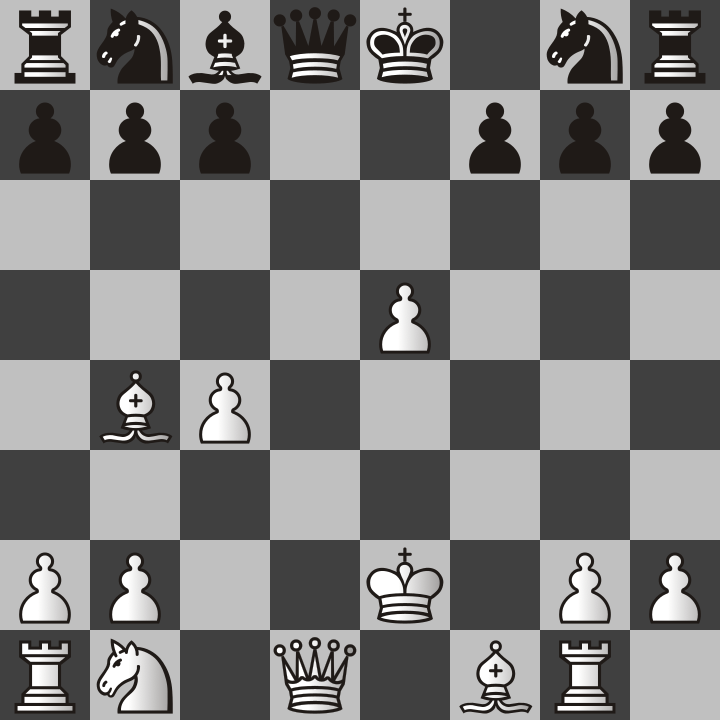
    Black now moves the bishop to b4 and puts the king in check. White has 4 options here, not a single one of which is any good. Either they move the king out of the way to e2 and block their bishop, or they put their knight, bishop, or queen in the way on d2 to block the check.

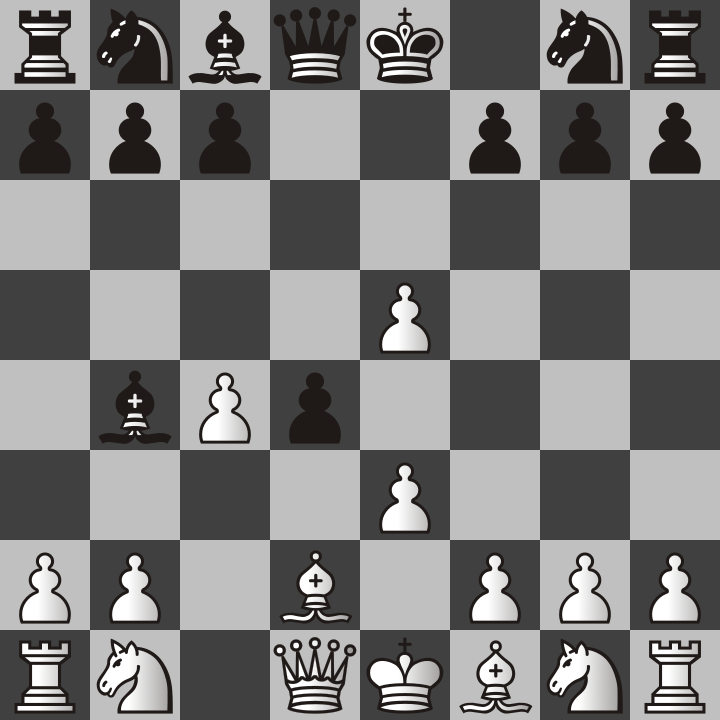
    Not wanting to sacrifice a knight, white sacrifices the bishop on d2.

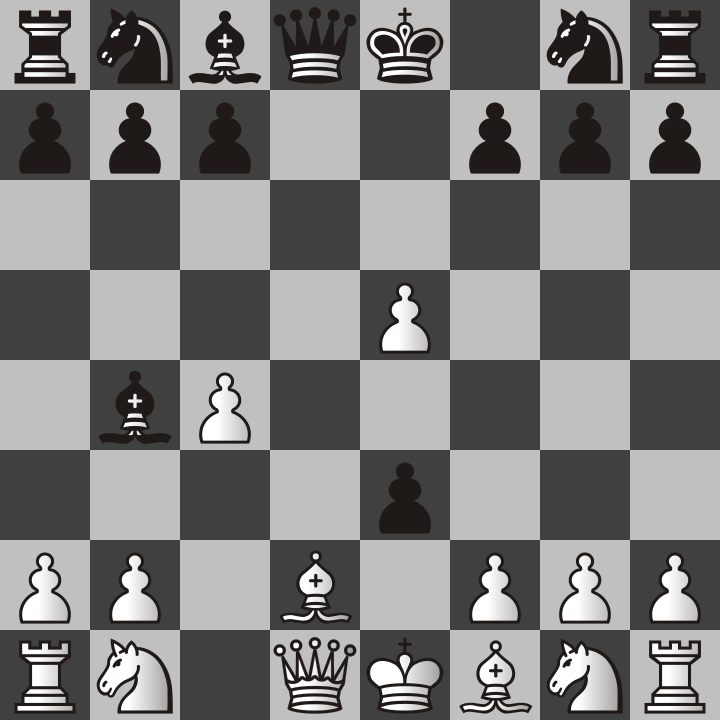
    But black never intended to capture anything with the bishop. They check was just a distraction from the d4 pawn which now takes the e3 pawn. Now it attacks the bishop and pawn. Also, the white bishop on d2 is not able to capture that pawn because then the king will be in check again.

    The white bishop simply takes the black bishop and thinks they are winning the game already.

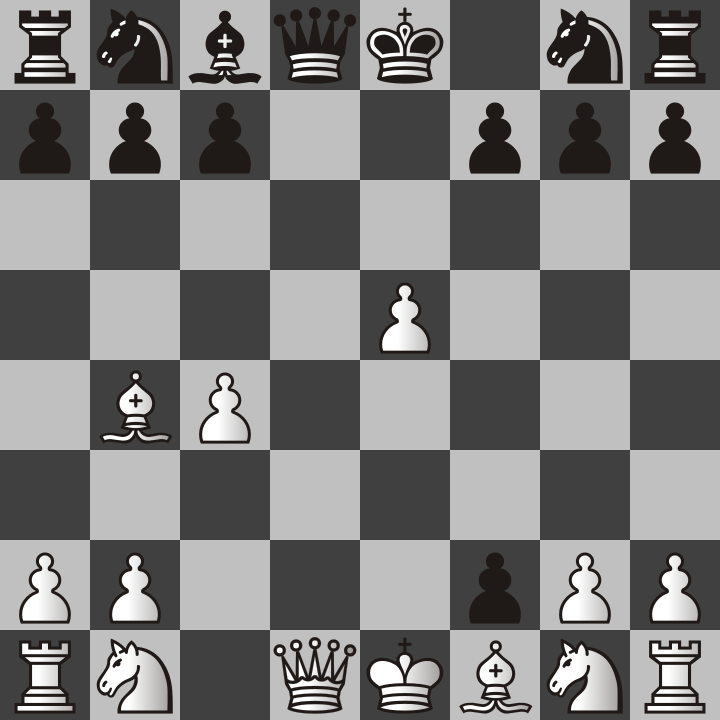
    But then the black pawn captures the f2 pawn and the king is in check. There are two legal moves here, both of which are losing for white. Either they move the king to e2 and let the pawn kill their knight, or they take the pawn, which seems like the logical option.

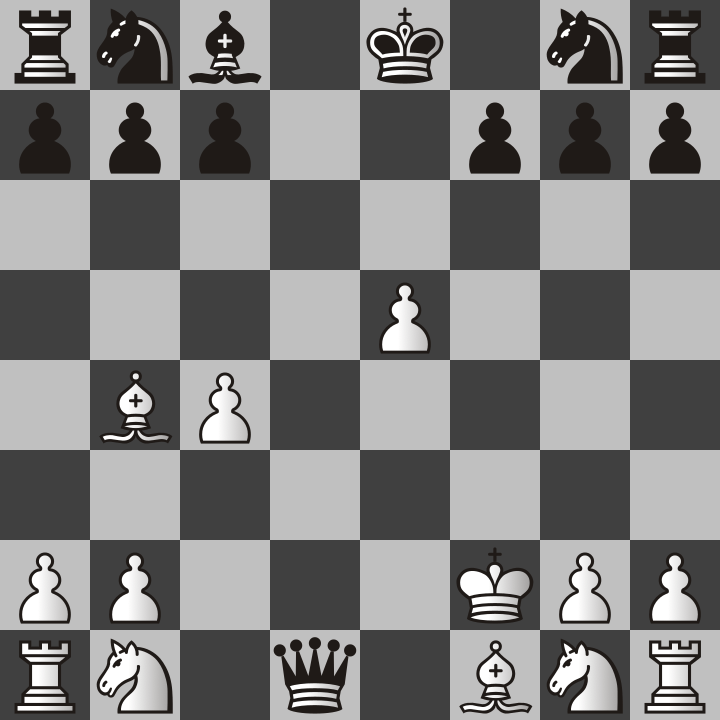
    The white king takes the pawn and yet fails to notice that nothing is defending their queen.

    Black queen takes white queen because when the white bishop moved out of the way, they had no obstacles between them.

    At this point, white usually resigns after losing their queen. There really are no good moves for white in this position and the black queen can keep putting the white king in check while taking all their pieces. This is why the Albin Counter Gambit is so dangerous to a Queen’s Gambit player like me. Don’t fall for this trap as I once did!

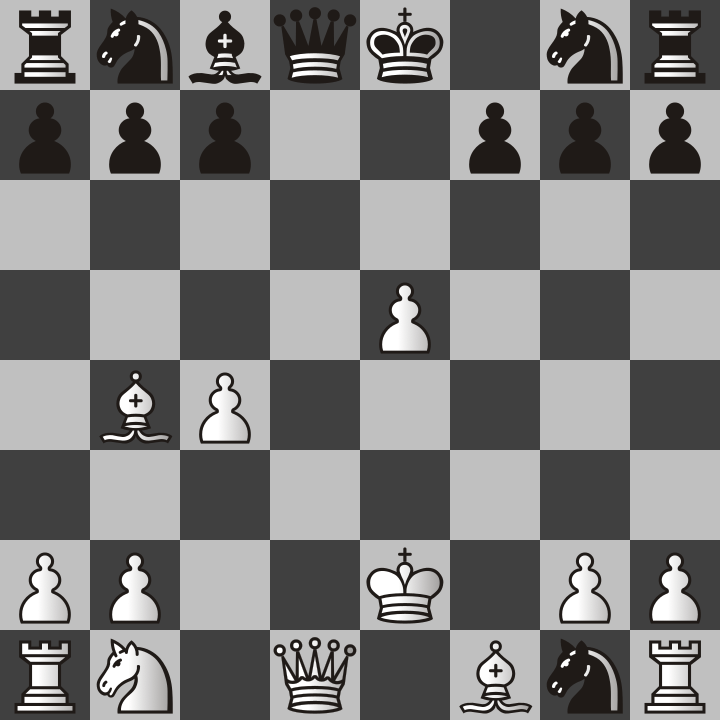
    But you may wonder, can the Queen be protected if the white king moves to e3 instead of taking the pawn on f2?

    No, because remember that the pawn can promote to any piece, including a knight when it promotes. This puts the king in check.

    Of course, the rook can take this black knight, but that will not help the situation at all.

    The true purpose of taking that knight was to remove the final defender of the king from a bishop on b4 check.

    As you can see, there is no way to protect the queen. As soon as the king moves to one of the 3 legal squares, the white queen will be captured by either the black bishop or queen.

    The Albin Counter Gambit doesn’t always go this way, but it certainly can. This is why it is a perfectly valid response to the Queen’s Gambit.

  • Chapter 10: The Making of the Ebook

    In the ebook edition of this book, a few things were modified. First, the links in the table of contents were changed to internal links for easier navigation in the ebook. They no longer point to the blog posts because the idea is that the ebook can be downloaded and read without requiring an internet connection once downloaded.

    In the paperback, the links cannot be clicked because the book is literal paper and ink instead of a computer. However, they are exceptionally helpful to me as the author because it means I can quickly go to the post for that chapter and check to see if there are any new comments! However, I did not want the links to remain the same for the ebook because it is meant to help you jump to the chapter on whatever device you are reading it on.

    Once I read the Pandoc documentation on the rules for linking to existing headings within a document, I used this command to test it as HTML in a web browser.

    pandoc ChastityChessChapters-ebook.md -o ebook.html

    Once I confirmed that the links worked correctly, I then converted to an epub file.

    pandoc ChastityChessChapters-ebook.md -o ebook.epub -s --metadata title="Chastity's Chess Chapters" --metadata subtitle="Chess is not as hard to learn as you have been told!" --metadata author="Chastity White Rose"

    Then I tested the epub by opening it in Calibre to see how it looked. To my surprise, the conversion worked very well.

    These technical details about software and formatting may not mean much to you as the reader, but this is useful information worth sharing for other authors who may have the desire to write a publish a book. They may already even have a manuscript typed up but don’t know how to get it published as a paperback (the original and true form of a book) or an ebook (the modern convenience of reading a book on your phone, iPad, Kindle, Nook, Kobo, etc).

    The process of publishing my first Chess book has taught me more than I would have ever thought was possible. I hope reading my book has helped you understand why I love Chess. If you are an author who wants some help publishing your book, I can also probably guide you with a few tools and tricks I have learned.

    My number one tip I would like to give authors right now is to publish an ebook through Draft2Digital. If you can write a book and produce a high quality epub file, you can expect that it will look pretty much the same when you publish it through Draft2Digital. This book you are reading is available on the Apple Books store, the Kobo Books store, Barnes and Noble, and some lesser known online book stores that I hadn’t heard about before joining Draft2Digital. This service is the fastest way I know of to get an ebook available in as many places as possible.

    However, the best part of this is that the books you publish through Draft2Digital are also available on Smashwords. Smashwords is particularly good because if you buy a book there, you can download the epub and then load it into whichever ebook reading application you like. This way you are not locked into only one vendor and can freely read the same book if you change from using Kindle to Kobo, Nook, or Apple Books.

    For example, this ebook is available on Smashwords in both English and Spanish.

    My Chess Books on Smashwords

    Chastity’s Chess Chapters

    Capítulos de ajedrez de Chastity

    My final statement on this matter is that I still think original paperback books are superior to electronic books, but my goal is to make my books available to people who also prefer reading ebooks. It is also possible to update ebooks faster than paperbacks because there is no printing cost. Therefore the ebook may have the latest changes and corrections before the paperback does.

    Please do contact me with any questions, comments, corrections, or Chess Challenges! My email address and website are below.

    chastitywhiterose@gmail.com

    https://chastitychesschallenge.com

  • Chastity’s Queen’s Gambit Opening Book

    The Reference that was too big for the other book!

    Chapter 0: Introduction

    This is the start of a new Chess book devoted to the Queen’s Gambit. Like the last book, it will be a series of blog posts, usually with some pictures to help you visualize it.

    This book will guide you through some of my most tested positions when playing Chess with the Queen’s Gambit. While this may include some material from my first Chess book, Chastity’s Chess Chapters, it will expand further beyond what I had space to include because the paperback was already at 100 pages. To reduce the number of pages and the printing cost, I will be reducing the size of some of the included images.

    Like the first book, I want the pictures to be a visual guide for people who have not mastered Chess notation yet. The failure of many Chess books is that they are full of notation and it is hard to follow unless you are literally sitting at a Chessboard or using Chess software to follow along. While you should be doing this for the best experience, I have a photographic memory and I find that without a picture, I won’t really remember what I learned. The visual learners will get the best benefit out of this book.

    The Queen’s Gambit Accepted

    The Queen’s Gambit sounds like a fancy name, and this name was used for a Netflix show as well. However, this opening was well known before people had televisions, computers, or the internet. The word “gambit” means sacrifice. In this opening white sacrifices a pawn with the hope of getting an advantage later. To some people, it also means a gamble because there is no way of knowing if it will work out the way you want depending on what your opponent does.

    The opening starts with each side moving the pawn in front of their queen. Then white moves the pawn on c2 to c4.

    d4-d5-c4.png

    In this position, black’s pawn can capture the white pawn and yet it doesn’t appear that white can capture it back, at least not yet. If it does take the pawn, this is known as accepting the gambit. New players will more likely than not take this pawn if they don’t see the trap.

    d4-d5-c4.png d4-d5-c4-dxc4d4-d5-c4-dxc4-e4.png

    You see, the idea was to distract the pawn and move it away from the center so that white’s king pawn could move two squares forward. Also notice that the white bishop on f1 could also capture the black pawn on c4 next turn, but not so fast, first, black has to choose their next move. The only problem is that there really is no good way for black to stop white from taking their pawn with the bishop. If they try to protect it with another pawn, things can turn out badly. Sooner or later white will capture back the c4 pawn with the bishop and if black tries to stop it, they will only lose more pieces.

    My best advice is that if you accept the Queen’s Gambit, also accept that you will lose this pawn and don’t try to defend it by moving the b7 pawn to b5. This has never worked out well for my opponents.

    All white has to do is move a pawn to a4 to attack the b5 pawn. The goal is to remove it from defending the c4 black pawn. White’s bishop wants to go there to attack the f7 square.

    If you are black, do not let the sequence of the following images happen to you!

    d4-d5-c4-dxc4-e4-b5.png d4-d5-c4-dxc4-e4-b5-a4.png d4-d5-c4-dxc4-e4-b5-a4-a6.png d4-d5-c4-dxc4-e4-b5-a4-a6-xb5.png d4-d5-c4-dxc4-e4-b5-a4-a6-axb5-axb5.png d4-d5-c4-dxc4-e4-b5-a4-a6-axb5-axb5-Ra8.png

    I also want you to notice that the previous sequence of moves would still be just as bad if white had decided to move their king’s pawn only one space to e3. There are valid reasons they might do so to add extra protection to the d4 pawn. The d4 pawn is only protected by the queen right now so beware of this in all your games.

    In the Queen’s Gambit Accepted, I prefer to move the king’s pawn to e3 because of a really awesome trap that has caused me to win a lot of games. Black’s most common way of protecting the c4 pawn is with pawn to b5. This never works well for black. And in this case, there is a 100% chance of black either losing a rook or a knight.

    Let me show you what happens in if white moves pawn to e3 instead of e4 after black defends the c4 pawn with b5.

    d4-d5-c4-dxc4.png d4-d5-c4-dxc4-e3.png d4-d5-c4-dxc4-e3-b5.png d4-d5-c4-dxc4-e3-b5-a4.png d4-d5-c4-dxc4-e3-b5-a4-c6.png d4-d5-c4-dxc4-e3-b5-a4-c6-axb5-cxb5.png d4-d5-c4-dxc4-e3-b5-a4-c6-axb5-cxb5-qf3.png d4-d5-c4-dxc4-e3-b5-a4-c6-axb5-cxb5-qf3-nc6.png d4-d5-c4-dxc4-e3-b5-a4-c6-axb5-cxb5-qf3-nc6-qxc6.png d4-d5-c4-dxc4-e3-b5-a4-c6-axb5-cxb5-qf3-nc6-qxc6-bd2.png d4-d5-c4-dxc4-e3-b5-a4-c6-axb5-cxb5-qf3-nc6-qxc6-bd2-qf3.png

    If you are the black player, I would recommend against accepting the Queen’s Gambit entirely. It leads to many traps by white. If you do accept it, you will lose your pawn anyway. Don’t waste time with that and instead move out other pawns depending on what pieces you plan to move. Below are the two most common responses to the Queen’s Gambit. The following is my written recommendations black should play instead.

    1. d4 d5 2. c4

    ! Good Moves for Black

    • e6 Defend the d5 pawn by moving the king’s pawn to e6. If white decides to capture the d5 pawn black will capture back and then white will still not be able to move their bishop to c4. Playing e6 is called the “Queen’s Gambit Declined”. This is the best move in my opinion because moving this pawn there prevents diagonal attacks on the f7 square even if white does manage to get their bishop or queen lined up there.

    • c6 Although it is less common, c6, known as the “Slav Defense” is another way to decline the gambit. By playing this move, black is hinting at a possible check against the white king by moving the black queen to a5. In any case, this move has the same idea that black will capture back on d5 if white’s c4 pawn takes it. It isn’t bad but

    ? Bad Moves for Black

    • dxc4 If black takes this pawn, they can fall into one of many possible traps. It is nearly impossible to prevent white from taking back this pawn with the bishop after moving the e pawn. Also, white now has the option to safely move the e pawn to e4 without it being captured because black no longer has the pawn on d5. If black has played dxc4 here, then they are now in a “Queen’s Gambit Accepted” position. White has the advantage of controlling the center with both their king and queen pawns. Black can still win of course but it will be much harder from here.

    Queen’s Gambit Declined

    d4-d5-c4-e6.png

    1. d4 d5 2. c4 e6

    If black declines the Queen’s Gambit with e6, there are some things white must look out for. First, by moving the e pawn, black allows their dark squared bishop to get out next turn. This can possibly put the king in check and/or pin the knight if it has moved to c3. Therefore, all evaluation of moves should consider this threat.

    ! Good Moves for White

    • c5 By advancing the c4 pawn to c5, black is prevented from getting their dark squared bishop out entirely. I recommend this as the best move because now both of black’s bishops are prevented from getting out. They already blocked their light squared bishop on e6 and now our c5 pawn prevents them from moving the dark squared bishop there unless they are prepared to get killed by the d4 pawn in response.

    • a3 is not the most offensive move but it is a nice defensive measure to prevent the dark squared bishop from coming to b4. This move should be done if white wants to safely move their knight to c3.

    • Nf3 Moving the knight to f3 is particularly good in the Queen’s Gambit Declined position because it is safe here and can possibly move to e5 next turn. It also means we have not committed to whether we will move the e pawn one or two squares.

    ? Bad Moves for White

    • Nc3 Whatever you do, don’t try moving the knight to c3 on this turn unless you are prepared to lose it! You can move it here later if you wish but not until you have dealt with the threat of black’s dark squared bishop first. There will be some people who disagree with me on this because they think losing a knight to take down a bishop is a fair trade. However, I protect my knights because they are my “Queen Killers” and are often involved in forks later in the end game that my opponents don’t see. If you move the knight to c3 here, the bishop can move to b4 and the knight can’t move because that would put the king in check.

    Slav Defense

    d4-d5-c4-c6.png

    1. d4 d5 2. c4 c6

    I must admit that I have not studied the Slav Defense as much as I have the Queen’s Gambit Declined or Queen’s Gambit Accepted. However, I do have two recommendations for white moves here.

    • Nf3 is a solid move because the knight will certainly be involve in the game at some point and is not under immediate threat.
    • Bf4 is a good idea here because we can target the knight on b8 now that the c pawn is not in the way. We have a lot of options for where the bishop can go from here. It is a safe move at this point with no real downsides. Don’t hesitate to kill the knight with the bishop unless you are player who prefers to keep your bishops alive. There is some matter of preference when it comes to the value of knights vs bishops.

    As I play more games in the Slav defense, I may have more to say here. The Slav Defense has its own merits even though it is not as popular as other responses to the Queen’s Gambit.

    Follow me for More Chess Tips

    I play Chess on Lichess.org almost daily. You can find me as user chastitywhiterose. Send me a challenge for a correspondence game or contact me for setting up a time for some live classical Chess!

    I also stream on Twitch and upload the videos to YouTube also.

  • Chapter 9: The Making of the Paperback

    Because this Chess book was originally written in Markdown and posted as a series of chapters to my WordPress blog, it did not have any concept of pages or margins because this is not needed to view it on the web. Making a paper book, on the other hand, is different because a physical book is a real physical object of a certain width and height. Some adjustments were needed to submit it to Kindle Direct Publishing.

    Therefore, I came up with a process to convert the text into a form that Amazon would accept for an 8.5-inch by 11-inch size book. The following are the exact steps I used with a combination of Pandoc and LibreOffice

    1. I created the default odt file that Pandoc uses for style reference. This command came straight from the Pandoc documentation.

    pandoc -o custom-reference.odt --print-default-data-file reference.odt

    1. I opened the custom-reference.odt file in LibreOffice and modified the left and right page margins to 0.5 for left and right. The images are exactly 7.5 inches wide, so this makes them perfectly centered to fit within the width margins of a page that is 8.5×11 inches. The top and bottom margins are not quite as important, but I set them to 0.5 for consistency.

    2. I also changed the style of “Heading 1” to automatically include a page break before the heading so that each chapter would start on a new page.

    3. Finally, I used the reference doc after modification as an input when making a new odt conversion of the book.

    pandoc ChastityChessChapters.md -o book.odt --reference-doc custom-reference.odt

    This file should look good enough to export directly as a PDF in LibreOffice. Although this may seem overly complicated, this process is more useful than you might expect. For one, it bypasses the use of “Industry Standard” tools like Microsoft Word that most writers think they need. Pandoc and LibreOffice are the only two software programs you need to create good-looking documents from Markdown files.

    However, this process is unnecessary for most books that contain only text. It was precisely because my Chess book had a lot of pictures that I used Markdown. I used this method because it allowed better control of the images than I could do in LibreOffice alone.

    I would also like to mention that several note-taking apps were useful to me as I was writing the book. Below are my top 3 favorite programs out of the many I installed and tried out.

    All 3 of those apps are useful for their ability to preview the output of what the source Markdown code will look like. For Mobile devices, Joplin and Simplenote are the best. For a PC with Windows, Mac, or Linux, ghostwriter is especially helpful because it works directly with plain text files on your system just like Notepad does, but it also allows a preview just like Joplin and Simplenote do. Testing the images was essential for making sure my pictures were linked correctly!

    In case you were wondering, all of the artwork was made using the program Inkscape. The Chess, Shogi, and Xiangqi pieces are either under a GPL or Public Domain license and came from open-source projects like lichess, lishogi and pychess.

    More copies of this book in paperback form can be purchased here on Amazon.

    https://www.amazon.com/dp/B0F44DG4XD

    You can buy the paperback edition of Chastity’s Chess Chapters or you can continue reading it for free on this blog.

  • Chess and Solitaire

    Could there be a connection between Chess and Solitaire? I have never written about this before, but I was obsessed with Solitaire in my teen years. At first it was Klondike, Spider, and Freecell because they were included on Windows XP.

    When I switched to Linux, I looked for open-source versions of it. The PySol Fan Club Edition had the largest collection of Solitaire games I have ever seen.

    But you might be wondering what this has to do with Chess. At the same time that I was playing Solitaire, I was also playing Chess a lot. When I discovered PySol, I was so into the cards that I bought a physical deck and started playing solitaire games and trying to invent my own.

    The fact that I got this far into Solitaire is evidence of my tendency to completely hyper-focus on a special interest. I was even designing new playing cards by editing the SVG files included in PySol. Ironically, this is the only game I designed art for besides Chess.

    But what reminded me of Solitaire recently was actually Raid Shadow Legends. They added Alice from Alice in Wonderland to the game, except they turned her into a Warrior Goth Girl with the Vorpal Sword and the most incredible outfit, which contains the chessboard and the card suits, from the standard playing card decks.

    Both playing cards and Chess are part of the Alice in Wonderland books and their many spinoffs and adaptations. Much like Alice, I, too, am a dreamer who visits a strange place. I have referenced this in some of my blog posts and songs. I have my version of Wonderland.

    I don’t know why but as I look at the chessboard and the designs on the playing cards, I can feel the power of these ancient symbols used for many games. Every piece, card, and rule has its history of how it came to be what it is today. Perhaps this is why people like me have board and card games as special interests and never seem to get tired of it. Some things have become famous all over the world. I wrote something about Alice after I saw her in Raid Shadow Legends. Once again, I had a moment upon seeing the design of her dress that reminded me of the games I love and why they bring me comfort.

    Alice the Wanderer
    
    Alice had no home in the human world. She preferred the nightmares of Wonderland over the nightmares of Earth. She had become stronger than she ever thought possible. She may not be able to win battles on Earth, but she has conquered the battlefield of her mind. She was not sure whether Wonderland was any more or less real than the world that humans called Earth.
    
    She had come to understand that the Mad Hatter was no more mad than she was. As the Cheshire cat had said, we are all mad here. A world of checkerboards and playing cards brought her comfort because it reminded her that life is a game and a game can be won. 
    
    But who sets the rules of the game? Alice was not sure, but she preferred to make her own rules. Alice makes the way and chooses her own path. In any case, it did not matter where she went. Alice was ready for anything, no matter where she was headed. She did not know where she was going, but she would get somewhere if she walked far enough.

  • Chapter 4: Chess Software

    In this Chapter, I will go over the best Free and Open Source software that is available for either playing or analyzing Chess. There are two command-line Chess Engines that I will recommend, two Graphical User Interface Programs that can use those engines, and two more utility programs that are specifically about managing Chess databases. Finally, I will mention how you can use these tools to analyze the games you have played.

    Stockfish

    I will not be covering how to install Stockfish because that is a separate matter, depending on your operating system. However, I will explain how Stockfish can be used from the command line once it is downloaded and placed in your path.

    However, you can easily download Stockfish and find a detailed guide for installing it on your platform.

    Usage at the command line

    Although the official stockfish documentation is very good at helping people to set up Stockfish with most GUI software, there is a way to play directly by running commands from a terminal or command prompt.

    After downloading and installing the engine by whatever means you used, just type “stockfish” at the command line or adjust the name to whatever your executable is named
    You will probably see a message similar to “Stockfish 17 by the Stockfish developers (see AUTHORS file)”.

    Simply type d and press enter. You will probably get something like this:

    That is because d is the display command and it will show a text representation of the Chess board. The position can be changed with a certain format. For example

    position startpos moves d2d4

    Will move the pawn from d2 to d4. This is my favorite starting move. So if you use the d command again. You will see that the pawn has now moved!

    Now that we have made our first move as white, we need to tell the computer to search for a move to reply with. For that we can enter go depth 1 and it will come up with a quick response. For example if we get the result “bestmove d7d5”. This means that the engine has decided that moving black’s Queen pawn is the best move. So we add this result to the end of our last command.

    position startpos moves d2d4 d7d5

    As you can see, both pawns have moved. However, this is not the preferred way for most people to use the engine. However, I did this as an example to show you what a Chess GUI has to do behind the scene to operate the engine and get back moves from it.

    Fairy Stockfish

    I would like to mention briefly that Fairy-Stockfish is a version of Stockfish that support all of the Chess variants available on lichess.org and even more. I have not mastered the use of it from the command line, but I have confirmed that it works with Xboard, which is the next program I am recommending.

    Xboard

    You can use XBoard/WinBoard to run not only Stockfish, but many other Chess engines that are less popular. I find the interface of the program to be a little bit confusing. However, I have created convenient commands to use which allow me to play Chess, Shogi, or Xiangqi with it on my Windows 11 laptop.

    winboard -fcp "C:\stockfish\fairy-stockfish.exe" -variant normal -xclock -depth 1

    winboard -fcp "C:\stockfish\fairy-stockfish.exe" -variant shogi -xclock -depth 1

    winboard -fcp "C:\stockfish\fairy-stockfish.exe" -variant xiangqi -xclock -depth 1

    If you are playing XBoard, the Linux version, you can change winboard to xboard and change the path of fairy-stockfish to wherever you have it installed.

    Although I have less experience using Xboard than the other recommended software in this book, XBoard when combined with Fairy Stockfish allows you to play more types of Chess Variants than any other program that I know about.

    Also, if you beat Fairy Stockfish at depth 1 using commands similar to the above, then try changing that number to something higher and then then the computer will search deeper and find even better moves to play against you. Beating it at full strength is impossible for a human player.

    En Croissant

    I recommend En Croissant for people who are only interested in playing standard Chess and want to analyze the games they have played on lichess.org or chess.com. It has a feature which can download all the rated games of a username of a player on those sites specifically. This means that if you play online on these sites, you can instantly obtain a database of your own games. You can use this to see how often you win or lose and what mistakes you are making.

    It also allows you to download larger databases of games like Caissabase which are full of games from the top Chess Masters of the world. This allows you to see how really good Chess players can play and maybe learn some things from them! That’s what I try to do!

    pgn-extract

    Once you have a database of your own games, or perhaps games of other people, you may want to filter them by certain criteria. The program pgn-extract is exactly what you can do this with. It is a command line only program. You will have to read the documentation to know all of its options but here are some commands that I commonly use to keep track of my best wins.

    These commands use the file “lichess_chastitywhiterose.pgn” which I downloaded directly from lichess.org. There is a built in export feature that allows you to select games of different time controls and/or variants and decide which ones to export to pgn file. pgn-extract can only handle standard chess games but it can sort them extremely fast. For example

    This first command takes all of the games where chastitywhiterose was the white player and won the game by checkmate.

    pgn-extract -Twchastitywhiterose -Tr1-0 lichess_chastitywhiterose.pgn -ochastitywhiterose_white_wins_lichess.pgn --checkmate

    The second does the reverse and finds every time that chastitywhiterose played as black and then black won the game by checkmate.

    pgn-extract -Tbchastitywhiterose -Tr0-1 lichess_chastitywhiterose.pgn -ochastitywhiterose_black_wins_lichess.pgn --checkmate

    I have said for years that only games ending in a checkmate are reliable information. If you opponent timed out because they fell asleep or got distracted, that doesn’t really feel like a win does it?

    ChessX

    The best currently available free and open source Chess database management program is ChessX. It allows you to open a pgn file and actually play through all the games with a graphical user interface. This is the best way to analyze your games and see visually where you made the mistakes. I have not full explored everything that the program can do but I read that it also has filtering capabilities similar to what you could have done with pgn-extract which I previously mentioned.

    Possible Updates

    I know there are infinitely more open-source Chess related programs out there that I have not had time to use or write about. If you know of any really good programs that are also open source, let me know and I can probably include them the next time I update this chapter!

    Chapter 5: The Best Chess websites

  • Series Title: Will Chuck Find His Mate?

    Series Logline

    An autistic Chess player wants to teach Chess to people in his town, but his plans to generate interest in the game don’t work as expected. By hiring an actress, he succeeds at inspiring others to play Chess, but his social awkwardness and the prejudice of society may cause him to lose both his Chess business and the woman who fell in love with him.

    Overview

    This show follows Chuck as he tries to come out of his introverted shell in order to teach people Chess. He fears people, but he also wants to bring back his favorite game, even if it means going in public. This story turns into a Romantic Drama because Chuck gets the idea to hire a woman from a dating app to help him teach Chess. It starts as a business relationship but then turns into something else. Through this experience, Chuck overcomes some of his social inability but also shows he eventually succeeds in getting people excited about Chess.

    Concept

    This show stands out because to my knowledge, there isn’t anything like it because it is meant to teach people the rules of Chess but also show why it is enjoyable from a psychological point of view. The idea is that Chuck is a master of navigating pieces on a chessboard but that navigating the real world proves to be more challenging than any game of Chess. The show is meant to inspire introverted autistic people to share their passions while also showing neurotypicals an inside look at how an autistic person thinks. If the series fails to do that, the second hope is that it may inspire people to play Chess in a similar way that the Queen’s Gambit series on Netflix did. However, this is not based on that series because I have not watched it.

    Characters

    Chuck

    Chuck is a lonely single man who does not have much of a social life outside of playing Chess online and occasionally other multiplayer online role playing games. Because he seeks connection with real people, he tries to teach Chess to people. However, his social awkwardness and autistic brain cause most people to be suspicious of him, and they assume Chuck is dangerous. Chuck needs someone else to help him appear more normal in society.

    Chuck is afraid of people and, therefore, limits going out of his apartment in most cases. His world is entirely the internet. He is a computer programmer who has made several applications and games that provide him with a constant income. He works for himself because no company will hire him. Unfortunately, Chuck never even got his high school diploma because he was homeless in his teen years after being kicked out of his parent’s house.

    An unfortunate rumor spread by the boys at school resulted in his parents and teachers finding out he was gay. Therefore, he was expelled from school and disowned by his parents when he was 14 years old. He lived by himself in the woods until he was 18 and then managed to get a job as a janitor and live in a homeless shelter. Over the years, he used the internet to teach himself everything he wanted to know about computers, games, and religion.

    At the beginning of the story, he is 40 years old and has no friends or family. He thinks he will never have a family because Chuck has no relationship with his parents, and he doesn’t try to find a partner because he is too afraid of human contact because of the rejection of his parents and school. He is incredibly smart at Chess and Shogi and writes blog posts about strategies for winning these games. The comments he receives on his writing and videos help him to interact with people socially, but only from the safety of his computer in his studio apartment.

    Laura

    Laura is a hopeless romantic who has joined Tinder, hoping to find a future husband and live happily ever after. She has received many unwanted messages from men she is not interested in. However, Chuck’s message catches her attention because he is offering her a paid role as an actress to pretend to be interested in learning Chess. Thrilled at the idea of having the closest thing to a date so far and not being required to have sex with someone, she accepts.

    Laura is quite surprised that Chuck seems only interested in Chess and computer programming. Chuck is the first man she has met who does not make comments about the appearance of her body or request to have sex with her.

    Laura was raised in a “Christian” home until the age of 12 when her father raped her. She took this as a sign that her father was too hypocritical to be a follower of Jesus. Laura ran away from home and became rebellious and anti-religious. She survived by stealing food, lying, and later became a prostitute because she had no means to get a job or even finish high school. Laura used every means to obtain money regardless of morality. She had no identification documents, such as a birth certificate or social security card, because obtaining them would require parental consent. She refused to risk being raped by her father, so she never made any attempt to contact her family.

    When she turned 18, she contacted the police and Social Security Administration about obtaining her birth certificate and social security card. As a legal adult, she was able to get them without parental consent. She applied to various jobs but was always rejected because she was homeless and had no address. She lived on the streets and eventually got a job at a pizza shop. She was trained to make pizzas and take orders from customers. The owner understood her situation and let her work regardless of her homeless status. After some time of holding this job and having a stable income, she was able to rent a cheap studio apartment.

    Laura still wants to know what it would be like to have a family. She is still a member of Tinder from when she used to date men only for financial advantage, but she is looking for a future husband without much luck. That is why Laura was quite surprised when Chuck messaged her about Chess. Though she wasn’t sure where this would lead, this man was clearly different.

    Simon

    Simon is a young boy who does not fit in with other children. He usually talks about Minecraft, Pokemon, Final Fantasy, and other games to kids his age who would rather play in the dirt or play sports that he is not physically adept at performing. However, Simon likes to learn games requiring strategy and complex tactics using his mind rather than his body. For this reason, when he sees Chuck and Laura with a Chessboard, he wants to know what this game is about because he has never seen it.

    Simon is socially very awkward and has a habit of talking to strangers about video games, cartoons, his favorite stuffed animals, or whatever he is thinking about at the time. Children get annoyed by him, and adults tell his parents to get him checked for autism. He is only 9 years old, but he reads a lot of books and strategy guides for completing video games. His parents love him and tend to be very protective of him because he must be watched so he does not wander off with strangers and get kidnapped.

    His favorite place is the park because he likes to swing on the swing set and climb on the monkey bars. Most of the time, his mother or father stays at the park while reading a book and lets him play at the park for an hour or two after school. His life changes when he meets Chuck and Laura because they seem as trustworthy as his parents, and he wants to know what game they are playing. For some odd reason, Chuck explains the game to him in a way that he understands without trying to dumb it down and assume he can’t understand because he is a kid. This kind of respect is what Simon has wanted all his life.

    As much as Simon loves his parents, he does not always get along with them because the truth is that he is so intelligent at math and games that they never seem to know what he is talking about. His parents love him but don’t know what he is because it seems like he is from another world. What they don’t know is that Simon is an autistic savant who cannot perceive other people’s emotions. Simon can predict what his opponents will do in games because he has a photographic memory and can play movies in his head of anything he has seen before. He knows humans are quite predictable and expects them to behave the same way they have in the past.

    Locations

    Two main locations in this series are of interest. The first is Chuck’s studio apartment where he works on his computer programming projects and plays online Chess. Chuck has very few possessions, so he has a lot of space even though his apartment is small. The second location which we will see a lot is a local park where he goes to play Chess with Laura. The exact details of the park are mostly irrelevant but it must have a table where it is possible to place a chessboard. For shooting purposes, the audience would not even notice if the different episodes were shot at different parks as long as the design of the tables was similar.

    Episode Guide/Springboards

    1. Over the Board

    We see Chuck in his apartment with a chessboard and notebook. He has his chessboard set up nicely, but he has no one to play with. He walks around the table and plays each side as best as he can. He is notating the moves on paper so he can later replay them back. He becomes frustrated at the fact that he finds no challenge because he knows all of his moves and wants someone to play with. He packs up his chessboard and pieces into his backpack and sets on a quest to find someone in his town who knows how to play Chess.

    1. Nobody cares about Chess

    Chuck walks around town with only his large checkerboard-styled backpack, which also contains his real Chess set inside. He tries talking to people at the mall, grocery stores, the library, and even the local high schools and elementary schools. Much to his surprise, nobody knows how to play Chess. If they have heard of it at all, they say that they heard it was hard to learn. Chuck offers to teach everyone he meets, but people dismiss him because he just looks like a creepy 40-year-old man walking around with a backpack.

    1. Resignation and New Idea

    Chuck is frustrated trying to find someone to play Chess with and goes back home to play Chess online as he usually does every night. He wins all his games and yet finds that the experience is lacking. The most social interaction he gets is the occasional chat message saying, “Good Game”. He has a list of friends on chess.com and lichess.org, but they are usually far away, and he wants to play people over the real chessboard as he sees in the official tournament videos or friendly games between the famous YouTubers he watches. Finally, he gets the idea that if he wants to find someone local, he could try a dating app because they are designed for people to meet in the same area.

    1. Chuck joins Tinder

    Chuck had never used any dating apps before, so he downloaded Tinder because he had heard it was popular. He sets up a profile and scrolls through lots of people. Finally, he notices the profile of a woman named Laura, who says she loves walking in nature and reading books. He considers her as someone smart enough to be perhaps interested in Chess, so he messages her. Laura is surprised to receive a message from a stranger asking if she would like to play Chess at the park. At first, she declines because she has put her dating life on hold and prefers to be alone unless there is money involved. When Chuck replies and offers her 50 dollars if she can just meet him at the local park, she accepts because she needs the money.

    1. Why do you play Chess?

    Chuck and Laura are at the park. Chuck teaches Laura all the rules of Chess in less than 30 minutes. Surprised by how simple it is to learn, she asks Chuck why he has an interest in such a simple game. Chuck explains that Chess is the perfect board game because it is less complicated to learn but that the competition of two minds trying to outsmart each other is where all the challenge comes from. Chuck does not play games of chance and explains that he prefers to play a game where he wins not by getting lucky but by making the right moves. This information inspires philosophical discussions about video games, card games, and board games.

    1. The Beginning of Romance

    On multiple occasions, Chuck and Laura go to the park and sometimes shop at the mall. They talk for hours about books, games, movies, and music. Laura is continually surprised how no matter what the topic is, he somehow manages to turn it into a comparison to a Chess game he has played. She starts to see his point of view that life really is like a game of Chess because each move affects the next. During one of their Chess games at the park, some children come over to the table and ask about the game Chuck and Laura are playing. Chuck explains how the pieces move and what it means to checkmate the king. Laura sees that Chuck likes to teach children and wonders what he would be like as a father. She really likes Chuck now that she has known him for some time.

    1. The First Fight

    Laura asks Chuck if he has ever had children or any past relationships. He does not want to tell her the truth about his struggles in life and being a closeted gay person. Instead, he tells her that he is better off alone and that he was never looking for a romantic relationship but a way to springboard his business of teaching Chess. Laura does not take the news as well as he expected. She yells at him for leading her on all this time, and yet he is clueless because he had to pay her to even meet him the first time, and so he did not expect her to actually be interested in a relationship. Laura storms off and leaves Chuck alone with his autistic brain and Chess set wondering what he has done wrong to upset Laura.

    1. The Accusation

    Chuck still goes to the park with his chess set, cell phone, and book most days of the week. A boy named Simon, who is used to seeing Chuck with Laura, asks where Laura is. Chuck tells him that he and Laura fought, but he doesn’t know what he did wrong. Simon asks to play Chess with Chuck, and they have a lot of fun until Simon’s father, Dirk, comes along and tells Simon to get away from the stranger. Not knowing the context, Dirk reports to the police about a suspicious man at the park. The police also jump to false conclusions because of the high crime rate in the area. This results in the brief arrest of Chuck until someone comes along to prove that he is not a danger to children.

    Contact Information

    chastitywhiterose@gmail.com

    (816) 844-2077

    https://chastitychesschallenge.wordpress.com/