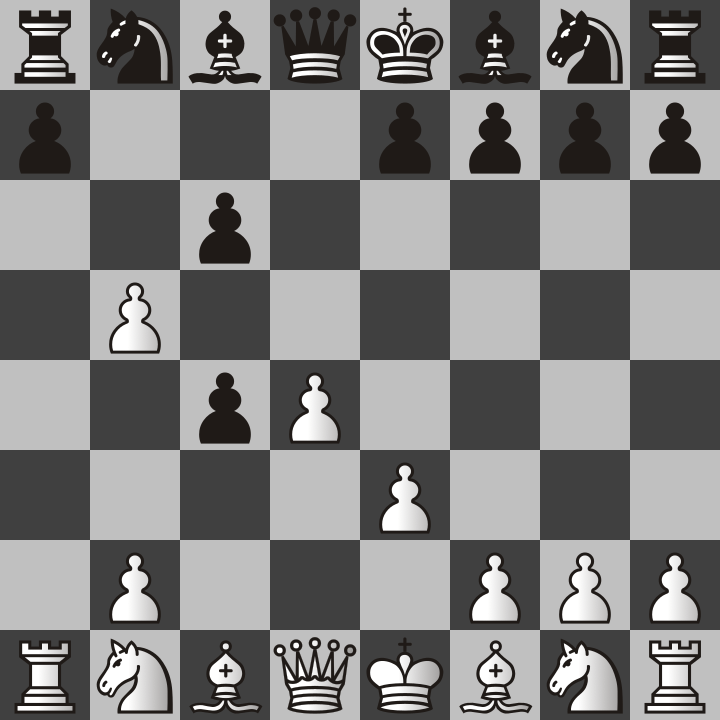
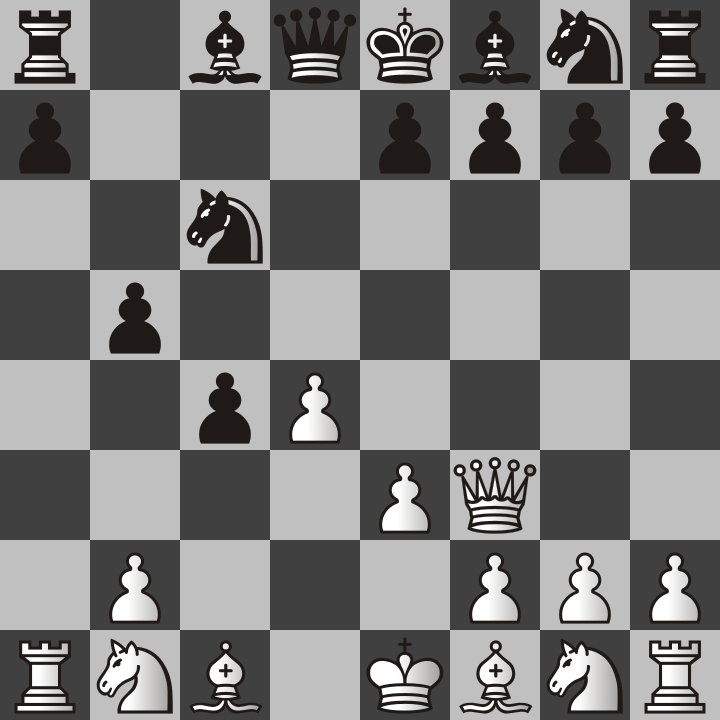
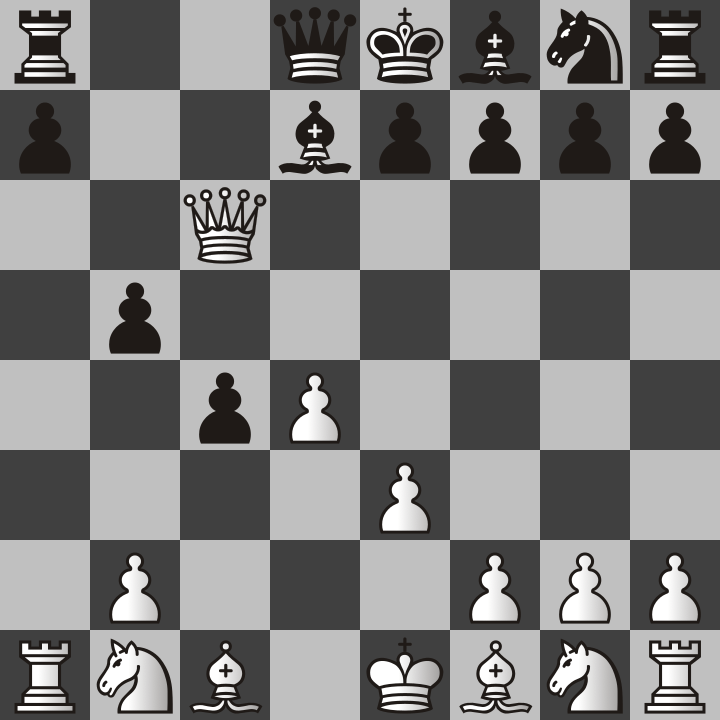
Tag: strategy

  • How to Filter Chess Games by Checkmates and Length

    When I first began playing Chess, I was obsessed with the Scholar’s Mate, which is when white wins the game in only 4 moves. Such occurrences are quite rare when playing against experienced players. However, I recently began thinking about how checkmates in under a certain number of moves could be useful.

    If a game is won in very few moves, there is a high chance that the winning player did not make any mistakes. Also, in certain arena tournaments, the winning player of the tournament is who has the most points by winning more games. Those who know how to win games in fewer moves can simply get more wins in the same amount of time.

    Therefore, I have written some instructions for using pgn-extract to find games with a certain number of maximum moves. I have previously mentioned how useful this command line tool is. If you download your own database of games from lichess.org, you can use my example commands by simply changing the names of the files and your username in the commands to find the games you have won the fastest.

    How to Find Checkmates

    the “–checkmate” flag is used to only output games that end in a checkmate instead of a resignation or a stalemate. See the example commands here.

    This first command takes all of the games where chastitywhiterose was the white player and won the game by checkmate.

    pgn-extract -Twchastitywhiterose -Tr1-0 lichess_chastitywhiterose.pgn -ochastitywhiterose_white_wins_lichess.pgn --checkmate

    The second does the reverse and finds every time that chastitywhiterose played as black and then black won the game by checkmate.

    pgn-extract -Tbchastitywhiterose -Tr0-1 lichess_chastitywhiterose.pgn -ochastitywhiterose_black_wins_lichess.pgn --checkmate

    How to Find Quick Checkmates

    The documentation for pgn-extract shows that you can limit the length of games matched in database. By combining the “–checkmate” flag and the “–maxmoves” flag with a number as an option, you can find all the checkmates that happen up to that number of moves.

    https://www.cs.kent.ac.uk/people/staff/djb/pgn-extract/help.html#move-bounds

    For example, this command finds all my checkmates with white which happen in 10 moves or less.

    pgn-extract -Twchastitywhiterose -Tr1-0 lichess_chastitywhiterose.pgn -ochastitywhiterose_white_wins_lichess.pgn --checkmate --maxmoves 10

    And this does the same with black checkmates of 10 moves or less.

    pgn-extract -Tbchastitywhiterose -Tr0-1 lichess_chastitywhiterose.pgn -ochastitywhiterose_black_wins_lichess.pgn --checkmate --maxmoves 10

    Because I am someone who usually plays the Queen’s Gambit opening as white and the French Defense as black, very few of my games end this quickly. My play style is to slowly wear my opponent down in a long classical game. But perhaps your style is to take your opponents down quickly before they even know what happened!

    I suggest downloading and installing the pgn-extract tool and placing the path to it in your system settings so you can run commands to extract your best wins.

    My own purpose in this is to identify games that I have played which are high quality enough to include in a future Chess book. Fast wins are quite satisfying.

  • Queen’s Gambit Accepted White Pawn to e3

    Daily writing prompt
    Describe a decision you made in the past that helped you learn or grow.

    When I made the decision to move my king’s pawn to e3 after black accepted the Queen’s Gambit. I learned of a Chess opening trap that led me to prefer pawn to e3 over e4. In this trap, black will lose a knight, bishop, or rook depending on which mistake they make.

    What I learned about this is that even though pawn to e3 blocks the dark squared bishop from getting out past it, the high chance that my opponent will fall into this trap makes it worth it. That bishop also should be kept there to defend the king from diagonal checks in the future.

    If you are the black player, I would recommend against accepting the Queen’s Gambit entirely. It leads to many traps by white. If you do accept it, you will lose your pawn anyway. Don’t waste time with that and instead move out other pawns depending on what pieces you plan to move. Below are the two most common responses to the Queen’s Gambit. The following is my written recommendations black should play instead.

    1. d4 d5 2. c4

    ! Good moves for Black

    • e6 Defend the d5 pawn by moving the king’s pawn to e6. If white decides to capture the d5 pawn black will capture back and then white will still not be able to move their bishop to c4. Playing e6 is called the “Queen’s Gambit Declined”. This is the best move in my opinion because moving this pawn there prevents diagonal attacks on the f7 square even if white does manage to get their bishop or queen lined up there.

    • c6 Although it is less common, c6, known as the “Slav Defense” is another way to decline the gambit. By playing this move, black is hinting at a possible check against the white king by moving the black queen to a5. In any case, this move has the same idea that black will capture back on d5 if white’s c4 pawn takes it. It isn’t bad but

    ? Bad moves for Black

    • dxc4 If black takes this pawn, they can fall into one of many possible traps. It is nearly impossible to prevent white from taking back this pawn with the bishop after moving the e pawn. Also, white now has the option to safely move the e pawn to e4 without it being captured because black no longer has the pawn on d5. If black has played dxc4 here, then they are now in a “Queen’s Gambit Accepted” position. White has the advantage of controlling the center with both their king and queen pawns. Black can still win of course but it will be much harder from here.

    Queen’s Gambit Declined

    d4-d5-c4-e6.png

    1. d4 d5 2. c4 e6

    If black declines the Queen’s Gambit with e6, there are some things white must look out for. First, by moving the e pawn, black allows their dark squared bishop to get out next turn. This can possibly put the king in check and/or pin the knight if it has moved to c3. Therefore, all evaluation of moves should consider this threat.

    ! Good moves for White

    • c5 By advancing the c4 pawn to c5, black is prevented from getting their dark squared bishop out entirely. I recommend this as the best move because now both of black’s bishops are prevented from getting out. They already blocked their light squared bishop on e6 and now our c5 pawn prevents them from moving the dark squared bishop there unless they are prepared to get killed by the d4 pawn in response.

    • a3 is not the most offensive move but it is a nice defensive measure to prevent the dark squared bishop from coming to b4. This move should be done if white wants to safely move their knight to c3.

    • Nf3 Moving the knight to f3 is particularly good in the Queen’s Gambit Declined position because it is safe here and can possibly move to e5 next turn. It also means we have not committed to whether we will move the e pawn one or two squares.

    ? Bad moves for White

    • Nc3 Whatever you do, don’t try moving the knight to c3 on this turn unless you are prepared to lose it! You can move it here later if you wish but not until you have dealt with the threat of black’s dark squared bishop first. There will be some people who disagree with me on this because they think losing a knight to take down a bishop is a fair trade. However, I protect my knights because they are my “Queen Killers” and are often involved in forks later in the end game that my opponents don’t see. If you move the knight to c3 here, the bishop can move to b4 and the knight can’t move because that would put the king in check.

    Slav Defense

    d4-d5-c4-c6.png

    1. d4 d5 2. c4 c6

    I must admit that I have not studied the Slav Defense as much as I have the Queen’s Gambit Declined or Queen’s Gambit Accepted. However, I do have two recommendations for white moves here.

    • Nf3 is a solid move because the knight will certainly be involve in the game at some point and is not under immediate threat.
    • Bf4 is a good idea here because we can target the knight on b8 now that the c pawn is not in the way. We have a lot of options for where the bishop can go from here. It is a safe move at this point with no real downsides. Don’t hesitate to kill the knight with the bishop unless you are player who prefers to keep your bishops alive. There is some matter of preference when it comes to the value of knights vs bishops.

    As I play more games in the Slav defense, I may have more to say here. The Slav Defense has its own merits even though it is not as popular as other responses to the Queen’s Gambit.

    Follow me for More Chess Tips

    I play Chess on Lichess.org almost daily. You can find me as user chastitywhiterose. Send me a challenge for a correspondence game or contact me for setting up a time for some live classical Chess!

    I also stream on Twitch and upload the videos to YouTube also.

  • Chapter 3: Chess variants

    As if learning standard Chess wasn’t enough fun, there are historical and modern variants of Chess. I can’t cover them all because there are literally hundreds. What I can do is tell you about some of my favorites and how they differ from Standard/Western Chess as described by most of this book.

    Crazyhouse

    Crazyhouse is a variant available on lichess where captured pieces are not simply gone from the board but instead convert to the color of the player who captured them to be dropped back on the board at a later turn! As you might guess, games in this variant tend to be longer because it is possible to escape a checkmate what you could not get out of in standard Chess.

    There are some special rules that you should be aware of.

    • Drops resulting in immediate checkmate are permitted.
    • Pawns may not be dropped on the players’ 1st or 8th ranks.
    • Promoted but captured pawns are dropped as pawns.

    The notation for Crazyhouse is the same as Chess except for the addition of the @ symbol to say that a previously captured piece is dropped back on the board.

    For example, consider the position of the Queen’s Gambit Declined from the previous chapter.

    d4-d5-c4-e6.png

    In this position, white decides to capture the d5 pawn with the c4 pawn.

    1. d4 d5 2. c4 e6 3. cxd5.png

    Next, black tried to put white’s king in check by moving bishop to b4.

    1. d4 d5 2. c4 e6 3. cxd5 Bb4+.png

    If this were regular Chess, white would not be able to move the king and would have to put a bishop or knight in the way to block the check. However, white previously captured a pawn and so they can drop one to the c3 square.

    1. d4 d5 2. c4 e6 3. cxd5 Bb4+ 4. @c3.png

    This means that the bishop is on the run and white has 9 pawns on the board. The situation is already looking like it will lead to a win for white.

    Atomic

    Another variant which is available on lichess is Atomic. In this game, whenever a piece is captured, it creates an explosion that blows up the surrounding 8 squares! However, pawns on those 8 squares do not explode for some reason. They must be made of Minecraft obsidian or something like that. However, when a pawn makes a capture, it does explode. For example, the following position shows that white has moved their king’s pawn two squares and black has moved their queen’s pawn two squares.

    1. e4 d5.png

    White can capture, however, when it does, both pawns disappear!

    1. e4 d5 2. exd5.png

    And now that there is nothing in the path of the black queen, they capture the d2 pawn and blow up white’s king, queen, and bishop because all of them were on the adjacent squares to the d2 pawn.

    1. e4 d5 2. exd5 Qxd2.png

    Black’s queen is also gone but black has already won this game of atomic chess! The king wasn’t just checkmated, it was actually destroyed in an explosion!

    So as you can see, atomic games don’t last very long because it doesn’t take many moves before pieces are destroyed. That doesn’t mean it is simple to win it though because I am not very good at it despite my experience in normal Chess. Still, it is my second favorite variant of standard Chess, right behind Crazyhouse!

    But there are more Chess variants available on other websites. Some of them are very different from the standard Chess but they have many things in common.

    Shogi

    For example, let me show you the board for Japanese Chess, which goes by the official name of Shogi!

    Chastity SVG Kanji Shogi Set.png

    It looks very fancy but unless you can read Japanese, these symbols probably make no sense to you. I can read them because I am experienced at playing Shogi enough in apps that force me to read their pieces. But for most people, the following image will make more sense.

    Chastity SVG Western Shogi Set.png

    Shogi is very much like Chess despite the difference in appearance. Shogi has pawns, kings, rooks, bishops, and knights. However, their some of their rules for movement are slightly different. However, the rook, bishop, and king are still identical to Western Chess.

    But there are new pieces, the Lance, the Silver General, and the Gold General. You need a tutorial on Shogi to learn how to play it. I may consider writing a tutorial later on but I have also been known to record videos on it and demonstrate how I play.

    Also, you can play Shogi anytime on lishogi.org. It allows you to choose either the traditional Japanese pieces like the first picture or the westernized pieces from the second picture.

    Xiangqi

    After you learn Chess and Shogi, I recommend Chinese Chess known as Xiangqi. You can learn and play it on xiangqi.com. Usually the game is played with pieces represented by Chinese Characters. However, many sites and programs allow you to select a westernized set similar to what was available for Shogi.

    chastity-svg-xiangqi-set.png

    You will find that Xiangqi is harder to learn because there are different rules for pawn movement depending on whether they have crossed the river. The game also has elephants which move two spaces diagonally but can never cross to the other side of the river. Because of this, you will find that the rooks, knights, and cannons are the important pieces.

    Cannons are actually one of the more bizarre pieces because nothing quite like them exists in Chess or Shogi. They move like a rook but cannot capture unless there is a piece in the way to jump over!

    I like Xiangqi almost as much as Chess and Shogi, but I am really bad it Xiangqi and I always lose because I am usually playing online against Chinese people who actually know how to play it well!

    After you learn the rules of Xiangqi, then you might want to play it on pychess. Pychess supports Chess, Shogi, and Xiangqi. It is probably the best site if you want to play the most variants possible.

    In the next chapter, I will be listing websites and which Chess variants they allow you to play. This chapter was merely a brief introduction so that you know that other games like Chess exist! I could never list them all, but I recommend at least learning Chess, Shogi, and Xiangqi. Once you know these three, then all other Chess variants will have similar rules to at least one of them.

  • Chapter 1: The Basic Rules of Movement

    Hello, I am Chastity White Rose and I am a chess player. I am one of many people who love the game of chess because it is one of the best games for playing with other people and understanding how their mind works.

    The actual rules of chess are not very hard to learn. There are 6 types of pieces, and they have very specific rules of how they move that never change. Compared to the complexity of most video games that people play, chess is actually very simple because there is a lot less to learn and remember. If you have played Pokemon, Final Fantasy, or Tetris, then you are smart enough for chess!

    But chess is not specifically a video game. It’s a board game that has only recently turned into a video game because there are chess programs for every machine you can imagine. You can play from a regular Personal Computer or a Smart Phone these days and play with other people all over the world through the internet. Later on, I will talk about some of the best sites to play chess online.

    But first, a basic explanation of the goal of chess. The way to win the game of chess is to checkmate the opponent’s king. Checkmate means that you are attacking the king and it has nowhere to move to escape and would be captured on the next turn. I will show examples of what this looks like later on.

    For now, I intend to teach you the basic rules of how each piece moves by isolating them from the other pieces and highlighting the empty squares by coloring those squares in green. Just think “green means go,” as in a traffic light.

    Below is a picture of what the chessboard typically looks like if you are playing a computer chess program. This picture shows how the pieces are arranged. The chess set used is called Merida, and it is one of the piece sets available on lichess.org, where I play chess online.

    Chess_Start.png

    I will next explain the names of each of these pieces and how they move.

    The first piece that you will want to learn is the pawn. The pawns are the most abundant piece on the board, and each side (black and white) has 8 of them to start with. They only move in one forward direction (away from the side they started on)

    Chess_Pawn_Move.png

    Pawns can move one square forward, except that they can also move two spaces on their first move. Notice that the left pawn is in its starting position and has not moved yet. Because of this, it can move to either square in front of it highlighted in green, but only on this first move.

    Pawns capture other pieces differently than the way they move onto empty spaces. They capture only one space diagonally forward. Consider the following image:

    Chess_Pawn_Capture.png

    The white pawn can capture either of the two black pawns on the blue squares because they are diagonally one space in front. Notice that the white pawn cannot capture the pawn exactly one space in front. It can only move that way if the square is empty.

    The previous two pages contain everything you need to get started with moving pawns. There is another rule called en passant that I will cover later in the special rules at the end of this chapter because it is quite rare to see. The main thing right now is to learn how each piece moves. Also, I want to explain my convention of how I use color in this book.

    Chastity Chess Color Coding.png

    Green Squares are for empty spaces which a piece can move onto. I will use them as illustrations of how each piece moves.

    Blue squares are for showing when a piece can capture other pieces on those squares.

    Red squares may be later used to explain spaces that a king cannot move onto because he would be in check and could be captured. Remember, if the king is captured, then the game is over, and whoever captured him wins. I am also considering the use of red squares for examples of bad moves in future examples.

    Unlike the pawns which have a special capturing rule different than how they move onto other spaces, every other piece moves and captures the same way. So take comfort in knowing it gets easier from here once you understand pawns.

    For these next examples, I will show the movement rules using a single piece on the board and highlight all the squares in green where that piece can move.

    Chess_Rook_Move.png

    The rook moves orthogonally. That means it can move up/down and left/right as many squares as it wants. If there are any pieces on those squares, it captures the first one it hits and then stops.

    The bishop is the opposite of the rook because it moves diagonally.

    Chess_Bishop_Move.png

    Notice that because of this, a bishop can only move onto 32 of the 64 squares on the chess board and always remains on the same color as what it started on. Remember, all official chessboards have light and dark squares of the checkerboard pattern.

    Next, I will introduce my favorite chess piece. It is called the knight, but it actually looks like a horse. It moves in a way that is called hippogonally. As it turns out, hippo actually means horse, and the hippopotamus means river horse. The knight is called a knight because knights often rode horses in battle. In older chess versions, it was simply called a horse.

    The knight has an unusual form of hippogonal movement. It jumps over other pieces but in a shape that looks like an L Tetris block. It may seem odd to describe it, but I will have a picture on the next page that includes an example of how a knight moves. But before that, I want to give my answer to the ancient debate between chess players over whether the knight or the bishop is a more powerful piece. If you are going to lose one or the other, each player has their preference of which to protect.

    My personal opinion is that the knight is more valuable. It is not as easy to checkmate with as other pieces, but I protect mine religiously because it is the ONLY piece that can simultaneously attack 8 pieces at one time. Because this piece is special, I will have to show some examples later on of how to use it effectively.

    See the image below to get an example of all the places a knight can jump to. It can move to 8 spaces if it is near the center of the board. It moves 1 square orthogonally and then one square forward diagonally from that direction.

    Chess_Knight_Move.png

    This movement of jumping over other pieces is unique to the knight. Using it effectively is a challenge because it is harder for new players to visualize it. Consider coming back to this page for a visual reminder of it.

    The queen is the most powerful piece in the game because she has the combined powers of a rook and a bishop! See below the example of all the places that the queen can move to!

    Chess_Queen_Move.png

    As you might guess, the queen is what most people rely on to win the game because she is so powerful. Players try to avoid losing the queen. She may only be a single piece but can wipe out an army unless the opponent has a plan to stop her!

    The king is exactly like a queen, but it can only move one square in any of the 8 directions. It is also the most important piece that decides who wins or loses the game. If the king is being attacked and cannot move to a legal square, the player who owns the king loses the game.

    Chess_King_Move.png

    In this next image, we see that the white queen is directly next to the black king. The black king has only one empty square that it could move to, but the queen attacks that square too and would still capture the king. That means it is checkmate! The white player wins in this example.

    Chess_Checkmate_Example_1.png

    You may wonder why the king can’t simply capture the queen. That is because then the bishop would then capture the king. Two or more pieces can easily gang up on a king and then it is game over. There are times, however, when only one enemy piece can checkmate the king if that king is blocked by its pieces.

    Consider the following image of a checkmate that is shown from the black player’s perspective. If you are playing the black pieces, they will be closer to you. That is to simulate what it would look like from above on a real chessboard.

    Chess_Checkmate_Example_2.png

    In this picture, you can see that white moved two of its pawns, and black also moved its queen over so that it is in a direct diagonal direction from the king. This position is checkmate because the other white pieces block the white king from moving to a safe spot. It also cannot move anything in the way.

    This form of checkmate is called the fool’s mate. It only happens if the white player is being a fool and traps themselves. Normally, you would not want to move those pawns unless you had already given yourself an escape route or moved other pieces that could resist the queen’s attack. The fool’s mate is more common than you think, and I include it so that you don’t fall into it.

    Now you know all of the most important rules of chess to get started with. There are two more rules called castling and en passant. However, I think it is best to get started playing chess and then learn about those rare cases later on. In the next chapter, I plan to show examples of what your first moves might be to get the game started. You can choose any legal move while it is your turn in the game of chess, but some moves are more likely to be successful than others. The previous example of the fool’s mate shows what pawns you may not want to move right at the start of the game.

    For now, remember that you can get started playing chess today! To get started playing online, I recommend lichess, the world’s best free chess server with no ads. Go to the following link and there are interactive lessons that allow you to practice moving the chess pieces.

    https://lichess.org/learn

    In fact, the depth of learning tools they offer you is far beyond what I have included in this chapter. However, I wish to point you in the right direction to a site you can use that will not scare you away by telling you to buy a premium membership or show ads constantly advertising products like Viagra, Burger King sandwiches, or laundry detergent. Nothing is worse than being distracted when you are trying to learn the number one board game in the world.

    And on that note, that is precisely why I paid for an upgraded plan on my wordpress blogs for the purpose of removing ads. I want to teach chess without my students or followers exposed to anything I find unethical and that I don’t have control over.

    Playing chess online is a good way to get started because it is unlikely that you will have another person available 24/7 willing to play with you at a time that is convenient for you.

    Also, lichess does have a mobile app for cell phones, but I recommend starting on a regular desktop or laptop PC because using a mouse is much easier than tapping on a tiny cell phone screen. It can be done, but the chance of mistakes is higher. However, I have had great success playing on my iPad because it has a much larger screen size.

    Try practicing playing a few games and then continue to the next chapter to see my suggestions on starting moves to help you have a chance at winning more often.

    Also, if you find yourself liking the game of chess, I do recommend creating an account on lichess because then you can challenge anyone or add them as a friend. Lichess is not just a site for playing chess. Lichess is an entire social network that also keeps track of all your games so that you can look back and see what went wrong. You can also follow other players and add them to your friends list to challenge them to a game conveniently.

    Below is the link to my profile:

    https://lichess.org/@/chastitywhiterose

    Send me a challenge any time and I will respond when I am available. My challenge is to teach people about the game of chess and help them improve so that they can beat me. That way, even if I lose the game, I still win as a teacher.

    I will finish this chapter by explaining the en passant and castling rules. These tend to confuse new players. It does not help that they conflict with normal pawn and king movement as previously described.

    En Passant

    Because a pawn can move two squares on its first turn, there is a special rule called en passant, which allows capturing the opponent’s pawn AS IF it had moved only one. Consider the following picture. The black pawn just moved two squares from its starting position. The blue square is where the white pawn can move to and capture the pawn “in passing” (which is what “en passant” means in French).

    Chess_en_passant.png

    The idea is that the pawn would have captured the pawn while it was moving through that square. The En Passant rule helps compensate for the limitations of a turn-based game. This rule only applies to pawns and only on the turn immediately after a pawn has moved two squares on its last turn.

    Castling

    Remember when I said a king only moves one square at a time? Most of the time, this is true. Although this makes no sense, there is a rule that allows a king to move two squares in one turn. Consider the setup below.

    Chess_Castle_Setup.png

    Because there are no pieces in between the king and rooks and because the king and rooks have not moved in this game, they are allowed to do a one-time “castle” move where the king and the rook both move. The king moves two spaces towards the rook, and then the rook goes to the square the king skipped over!

    King side castle

    Chess_Castle_Right.png

    Queen side castle

    Chess_Castle_Left.png

    Don’t let these special rules confuse you too much. They are a bit nonsensical. In fact, I would compare them to the T spin triple rules in Tetris. On a related note, Tetris is actually a really good game, too. Tetris is my favorite video game, but it is not as easy to play as chess because Tetris requires quick reflexes and planning in mere seconds.

    Chess is more of a game for slow, careful thinkers. Although some play speed chess, I don’t recommend trying to play fast for beginners. Focus on the quality of moves rather than how many moves you can make in a minute. Also, play without time limits or choose reasonable time limits. I play 30-minute live games against other people online, and my rating for classical chess is higher than rapid, blitz, or bullet chess because I am slow to move and prefer to think and make the best move.

    Time limits are artificial inventions made for the convenience of society. Don’t rush through chess the same way everyone in society forces you to be fast and cause accidents in the real world. I work at Walmart, so I know what happens when employees are rushed. Products get put in the wrong spot, and injuries happen if people value only speed and forsake everything else.

    Chess, or any game for that matter, should be for fun, not as a job you do because someone else is forcing you to. No matter what, you must remember that!