The following steps outline what I did to convert my Chess book I recently published into Spanish through the power of Google Translate. I did this because I have Spanish speaking friends and Spanish is the second most commonly spoken language in the United States of America.
First, I had to take the original ebook in English and convert it into an OpenOffice Document.
Then I saved it as a Microsoft Word docx file from within LibreOffice. This is so Google Translate will accept it as a valid document.
Then, I had to go to Google Translate and convert the entire document to Spanish.
The final step was converting this document into an epub for the Spanish ebook.
pandoc book-spanish.docx -o ebook-spanish.epub -s --metadata title="Capítulos de ajedrez de Chastity" --metadata subtitle="¡El ajedrez no es tan difícil de aprender como te han dicho!" --metadata author="Chastity White Rose"
When I published it, I did not edit the results at all because I know so little Spanish that if there was something wrong, I would not have a clue how to fix it.
However, I also changed the text on the cover of the book to the Spanish equivalent of what I had on the English cover. I suspect that my book will provide a much needed resource to Spanish speakers because most books on Chess are written by players who are English, French, and Indian. Since my goal is to promote Chess to people of every kind, it was essential to make a Spanish translation, and perhaps other languages will follow in the future now that I have a working process to translate an entire book very quickly.
The Spanish version I made can be found on Smashwords and Amazon.
This is the Chinese character version of my previous Xiangqi set that used westernized pieces. I made this to help me get used to the Chinese pieces by choosing a set from the Pychess repository that looked visually appealing to me and then placing it on the exact same board I designed for the western version.
See the western version below for reference.
As I mentioned in my book, I have played Xiangqi but I am not very good at it yet. I am much more experienced with Chess and Shogi, but Xiangqi is definitely in the same category of games.
There is a response that black can use against white’s queen’s gambit. The result is that black can take white’s queen if they make two critical mistakes,
I have pictures of the most common sequence of moves here. I will explain the ideas behind the Albin Counter Gambit and why it can be used to turn the tables against white and destroy their queen. They can of course avoid the trap in a few ways, but this opening is psychologically very tricky.
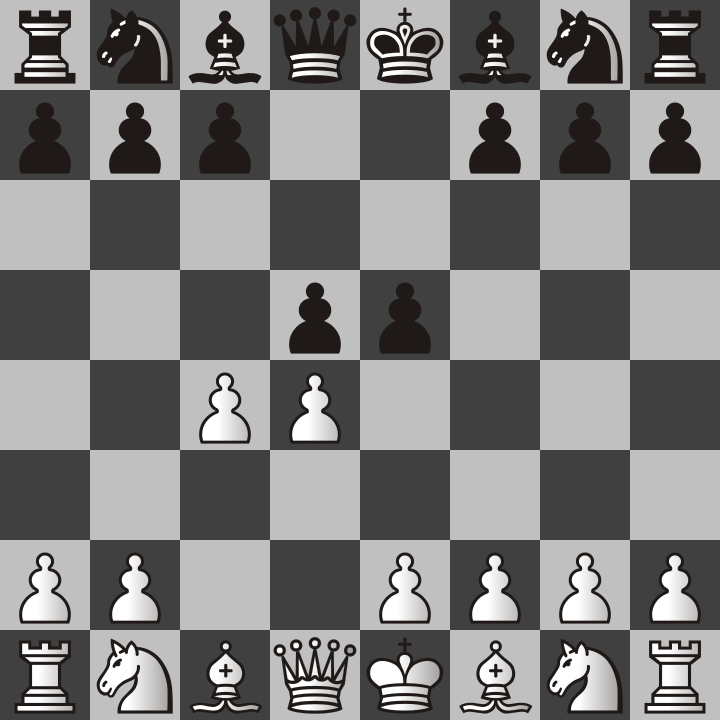
First, we are in the Queen’s Gambit position. White offers a free pawn on c4 to tempt black into taking it. I have previously covered why you should not accept the gambit pawn. Those who are playing black can use the following tricks.
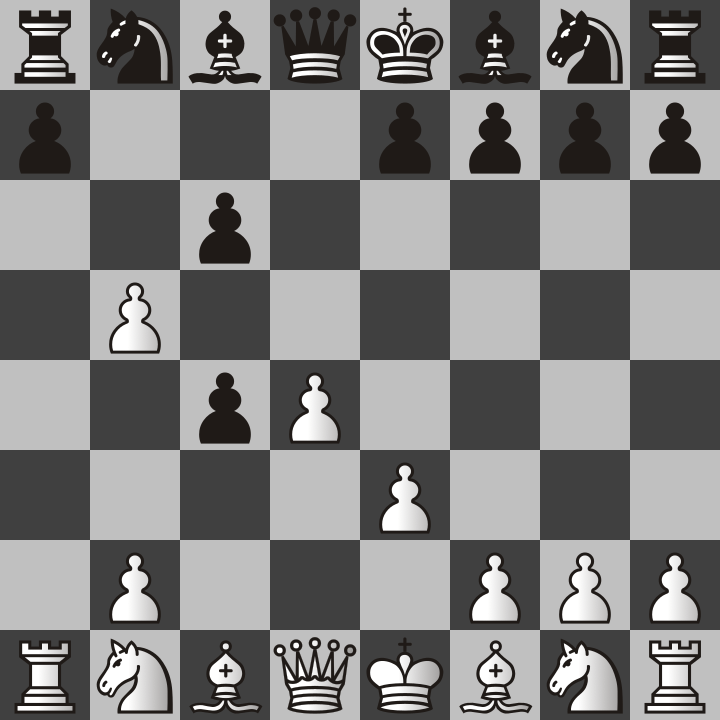
Instead of taking the pawn, or using the common declines of moving a pawn to e6 or c6, black instead moves their king’s pawn two squares to e5. This is a counter gambit because now white will think “Yay, a free pawn!”. Usually they will take it without question.
White takes the pawn. There is no reason not to because it really is a good move. However, white will be overconfident at this point, thinking they are playing someone who doesn’t know what they are doing.
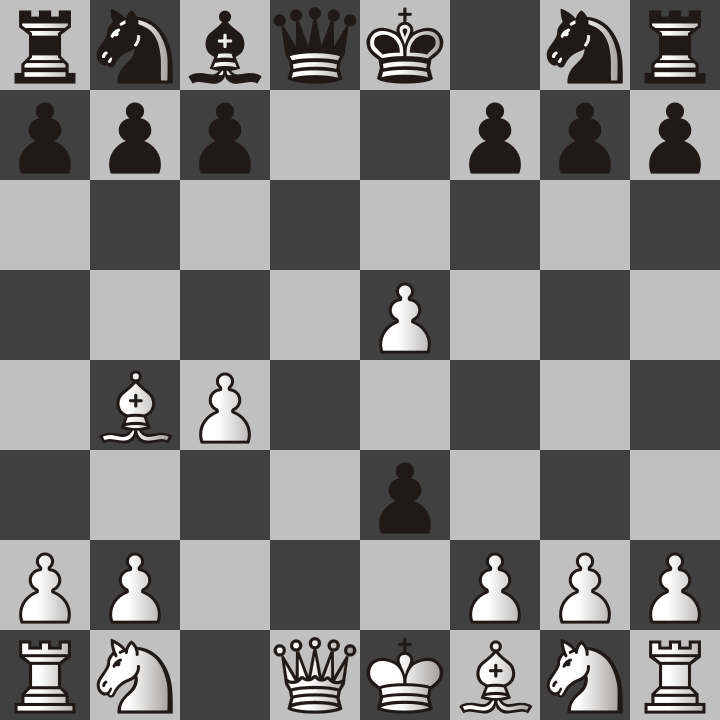
Black moves the d5 pawn one square forward to d4 where white’s pawn was before. This doesn’t look like a problem except that it means white cannot move their knight to c3 or the pawn will take it.
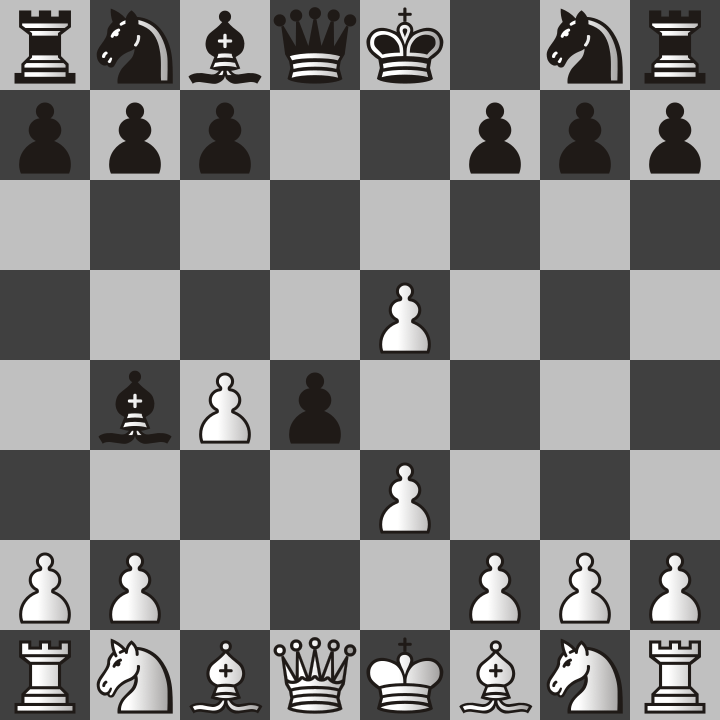
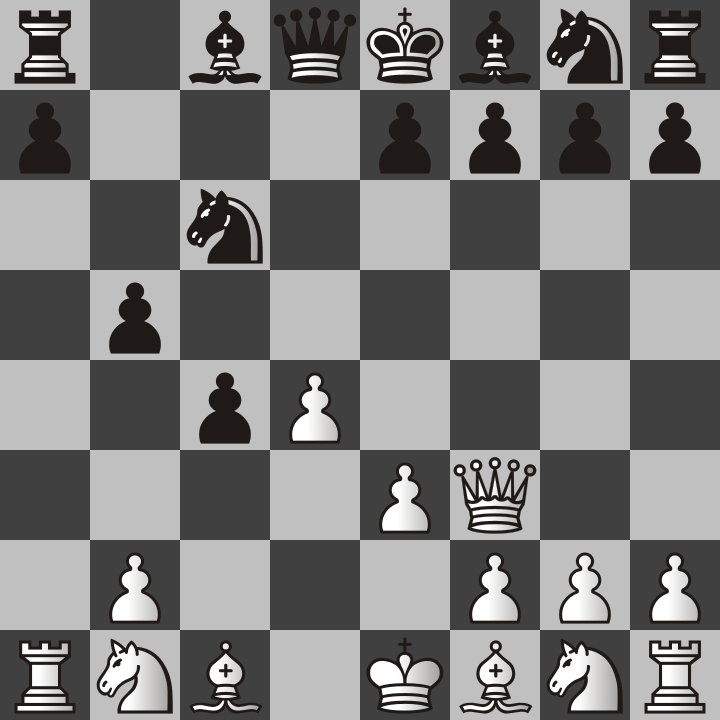
White will probably try to advance their king’s pawn to e3 with the idea of trading queens if the black pawn captures it.
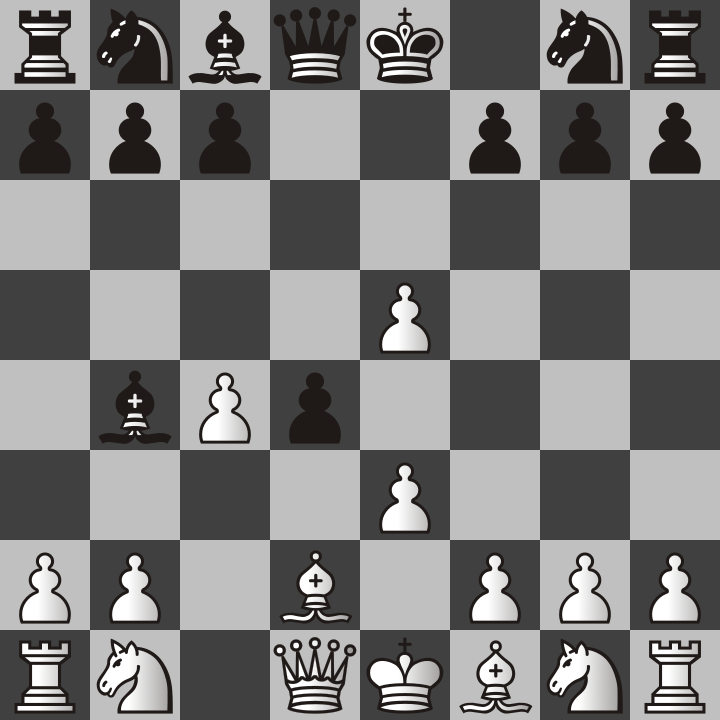
Black now moves the bishop to b4 and puts the king in check. White has 4 options here, not a single one of which is any good. Either they move the king out of the way to e2 and block their bishop, or they put their knight, bishop, or queen in the way on d2 to block the check.
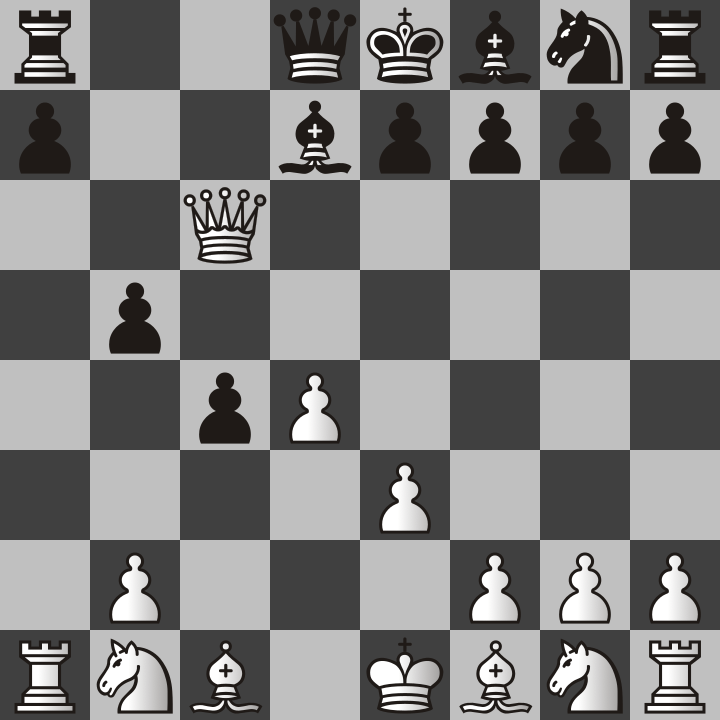
Not wanting to sacrifice a knight, white sacrifices the bishop on d2.
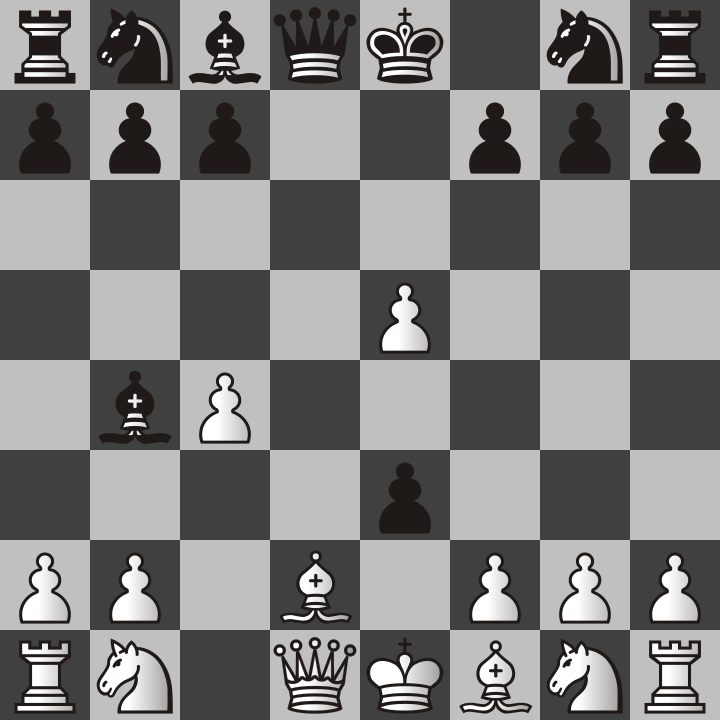
But black never intended to capture anything with the bishop. They check was just a distraction from the d4 pawn which now takes the e3 pawn. Now it attacks the bishop and pawn. Also, the white bishop on d2 is not able to capture that pawn because then the king will be in check again.
The white bishop simply takes the black bishop and thinks they are winning the game already.
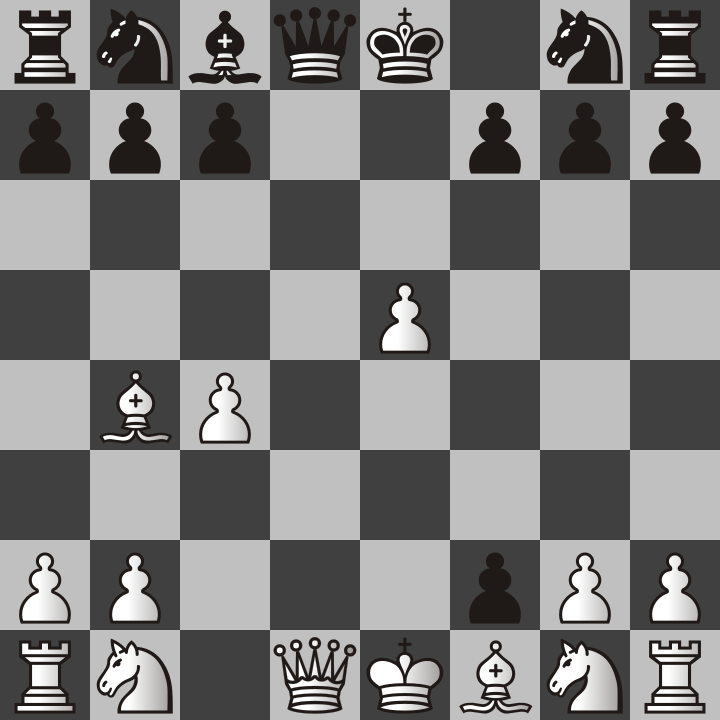
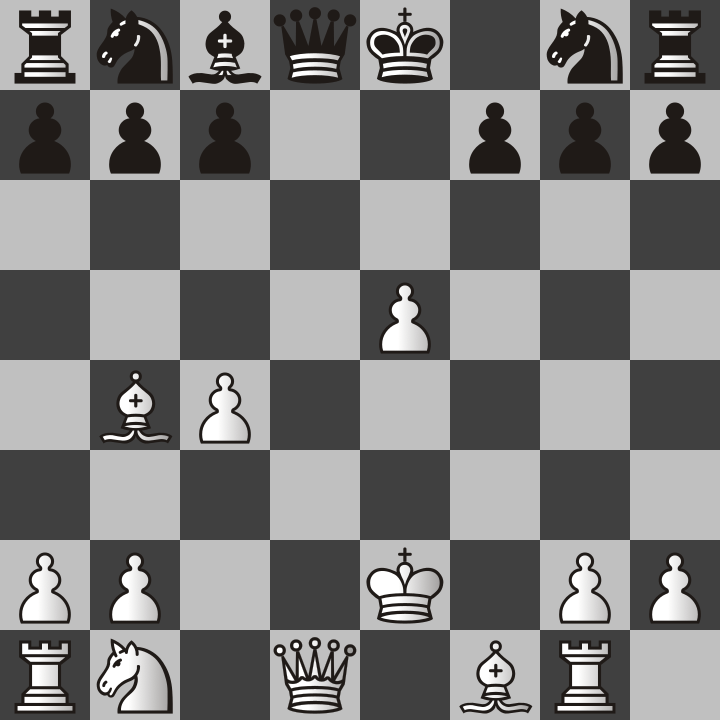
But then the black pawn captures the f2 pawn and the king is in check. There are two legal moves here, both of which are losing for white. Either they move the king to e2 and let the pawn kill their knight, or they take the pawn, which seems like the logical option.
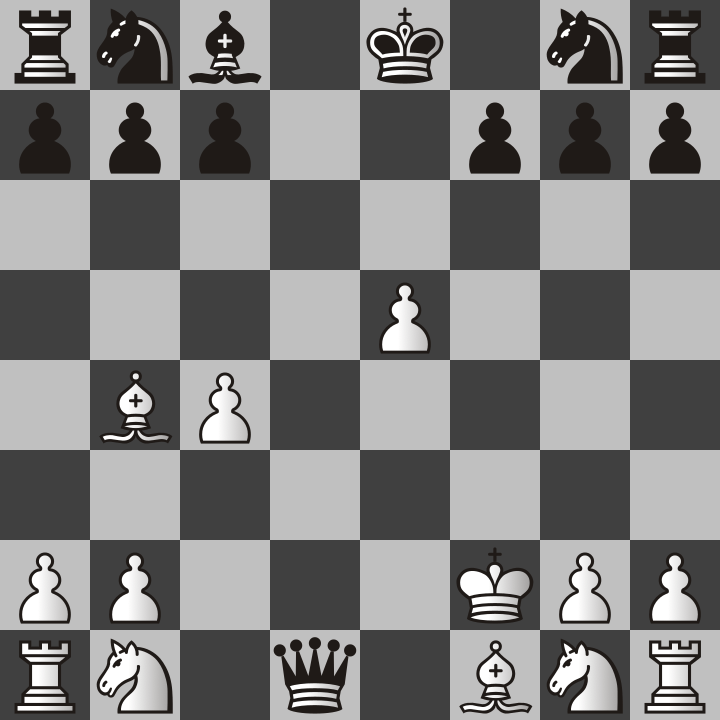
The white king takes the pawn and yet fails to notice that nothing is defending their queen.
Black queen takes white queen because when the white bishop moved out of the way, they had no obstacles between them.
At this point, white usually resigns after losing their queen. There really are no good moves for white in this position and the black queen can keep putting the white king in check while taking all their pieces. This is why the Albin Counter Gambit is so dangerous to a Queen’s Gambit player like me. Don’t fall for this trap as I once did!
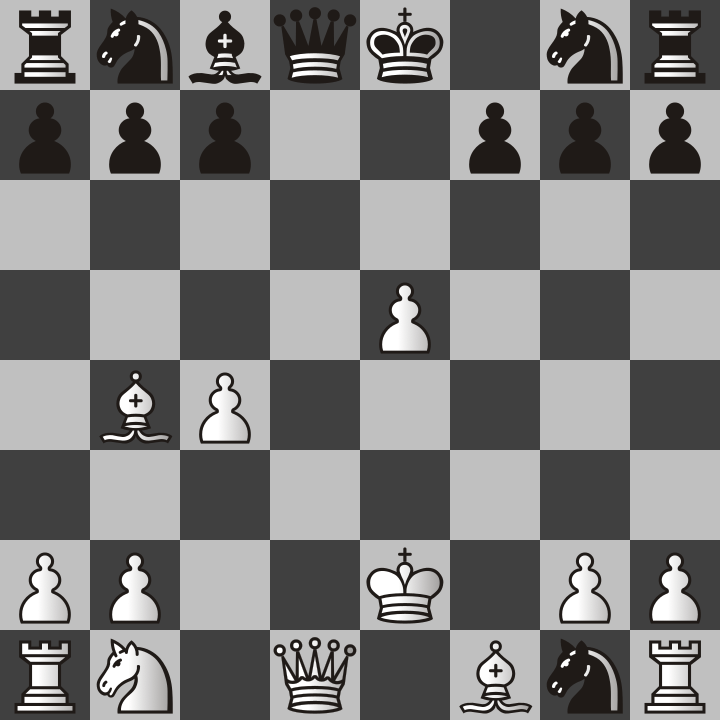
But you may wonder, can the Queen be protected if the white king moves to e3 instead of taking the pawn on f2?
No, because remember that the pawn can promote to any piece, including a knight when it promotes. This puts the king in check.
Of course, the rook can take this black knight, but that will not help the situation at all.
The true purpose of taking that knight was to remove the final defender of the king from a bishop on b4 check.
As you can see, there is no way to protect the queen. As soon as the king moves to one of the 3 legal squares, the white queen will be captured by either the black bishop or queen.
The Albin Counter Gambit doesn’t always go this way, but it certainly can. This is why it is a perfectly valid response to the Queen’s Gambit.
When I made the decision to move my king’s pawn to e3 after black accepted the Queen’s Gambit. I learned of a Chess opening trap that led me to prefer pawn to e3 over e4. In this trap, black will lose a knight, bishop, or rook depending on which mistake they make.
What I learned about this is that even though pawn to e3 blocks the dark squared bishop from getting out past it, the high chance that my opponent will fall into this trap makes it worth it. That bishop also should be kept there to defend the king from diagonal checks in the future.
If you are the black player, I would recommend against accepting the Queen’s Gambit entirely. It leads to many traps by white. If you do accept it, you will lose your pawn anyway. Don’t waste time with that and instead move out other pawns depending on what pieces you plan to move. Below are the two most common responses to the Queen’s Gambit. The following is my written recommendations black should play instead.
1. d4 d5 2. c4
! Good moves for Black
e6 Defend the d5 pawn by moving the king’s pawn to e6. If white decides to capture the d5 pawn black will capture back and then white will still not be able to move their bishop to c4. Playing e6 is called the “Queen’s Gambit Declined”. This is the best move in my opinion because moving this pawn there prevents diagonal attacks on the f7 square even if white does manage to get their bishop or queen lined up there.
c6 Although it is less common, c6, known as the “Slav Defense” is another way to decline the gambit. By playing this move, black is hinting at a possible check against the white king by moving the black queen to a5. In any case, this move has the same idea that black will capture back on d5 if white’s c4 pawn takes it. It isn’t bad but
? Bad moves for Black
dxc4 If black takes this pawn, they can fall into one of many possible traps. It is nearly impossible to prevent white from taking back this pawn with the bishop after moving the e pawn. Also, white now has the option to safely move the e pawn to e4 without it being captured because black no longer has the pawn on d5. If black has played dxc4 here, then they are now in a “Queen’s Gambit Accepted” position. White has the advantage of controlling the center with both their king and queen pawns. Black can still win of course but it will be much harder from here.
Queen’s Gambit Declined
1. d4 d5 2. c4 e6
If black declines the Queen’s Gambit with e6, there are some things white must look out for. First, by moving the e pawn, black allows their dark squared bishop to get out next turn. This can possibly put the king in check and/or pin the knight if it has moved to c3. Therefore, all evaluation of moves should consider this threat.
! Good moves for White
c5 By advancing the c4 pawn to c5, black is prevented from getting their dark squared bishop out entirely. I recommend this as the best move because now both of black’s bishops are prevented from getting out. They already blocked their light squared bishop on e6 and now our c5 pawn prevents them from moving the dark squared bishop there unless they are prepared to get killed by the d4 pawn in response.
a3 is not the most offensive move but it is a nice defensive measure to prevent the dark squared bishop from coming to b4. This move should be done if white wants to safely move their knight to c3.
Nf3 Moving the knight to f3 is particularly good in the Queen’s Gambit Declined position because it is safe here and can possibly move to e5 next turn. It also means we have not committed to whether we will move the e pawn one or two squares.
? Bad moves for White
Nc3 Whatever you do, don’t try moving the knight to c3 on this turn unless you are prepared to lose it! You can move it here later if you wish but not until you have dealt with the threat of black’s dark squared bishop first. There will be some people who disagree with me on this because they think losing a knight to take down a bishop is a fair trade. However, I protect my knights because they are my “Queen Killers” and are often involved in forks later in the end game that my opponents don’t see. If you move the knight to c3 here, the bishop can move to b4 and the knight can’t move because that would put the king in check.
Slav Defense
1. d4 d5 2. c4 c6
I must admit that I have not studied the Slav Defense as much as I have the Queen’s Gambit Declined or Queen’s Gambit Accepted. However, I do have two recommendations for white moves here.
Nf3 is a solid move because the knight will certainly be involve in the game at some point and is not under immediate threat.
Bf4 is a good idea here because we can target the knight on b8 now that the c pawn is not in the way. We have a lot of options for where the bishop can go from here. It is a safe move at this point with no real downsides. Don’t hesitate to kill the knight with the bishop unless you are player who prefers to keep your bishops alive. There is some matter of preference when it comes to the value of knights vs bishops.
As I play more games in the Slav defense, I may have more to say here. The Slav Defense has its own merits even though it is not as popular as other responses to the Queen’s Gambit.
Follow me for More Chess Tips
I play Chess on Lichess.org almost daily. You can find me as user chastitywhiterose. Send me a challenge for a correspondence game or contact me for setting up a time for some live classical Chess!
I also stream on Twitch and upload the videos to YouTube also.
The best way to obtain a free database is to play games on lichess.org and then go to your profile and find the export options.
Then you will want to make sure you have selected only the standard variant and the time controls you want to be included. Chess database programs almost never support anything other than standard Chess. This is unfortunate because I would love to see how a Crazyhouse database would look. Maybe software for other variants will be invented or exists that I don’t know about. In the meantime, stick with standard.
When you have downloaded a database to the filename of your choice, you will want to install a program such as [ChessX](https://chessx.sourceforge.io/) which can help you play the games out on a graphical chessboard. There are many other applications like [Scid vs. PC](https://scidvspc.sourceforge.net/) or various products sold by the Chessbase company. However, I don’t recommend paying for a program unless you are a professional Chess player who wins prize money to justify the cost of it. Therefore, I have chosen only to recommend free and open-source tools.
I was feeling depressed and wrong Because my nights of work are long Until my student Tam wrote me a song And suddenly I somehow felt strong
Every thought I had Tam could express How hard I work and how much I love Chess But don’t have time and my life is a mess But Tam understands me well I must confess
Sometimes I am sad and feeling down And in my many trials I start to drown I still make Tam laugh because I am a clown Others don’t care but Tam writes of my renown
Thank you Tam, for reminding me Of my rainbow that you can see When the time comes that I am free To the Chess Wonderland we will flee
Tam, you are my student, sister, and friend On my commitment you can depend Because I speak the truth and never pretend But against my knights you must learn to defend!
In the ebook edition of this book, a few things were modified. First, the links in the table of contents were changed to internal links for easier navigation in the ebook. They no longer point to the blog posts because the idea is that the ebook can be downloaded and read without requiring an internet connection once downloaded.
In the paperback, the links cannot be clicked because the book is literal paper and ink instead of a computer. However, they are exceptionally helpful to me as the author because it means I can quickly go to the post for that chapter and check to see if there are any new comments! However, I did not want the links to remain the same for the ebook because it is meant to help you jump to the chapter on whatever device you are reading it on.
Once I read the Pandoc documentation on the rules for linking to existing headings within a document, I used this command to test it as HTML in a web browser.
Once I confirmed that the links worked correctly, I then converted to an epub file.
pandoc ChastityChessChapters-ebook.md -o ebook.epub -s --metadata title="Chastity's Chess Chapters" --metadata subtitle="Chess is not as hard to learn as you have been told!" --metadata author="Chastity White Rose"
Then I tested the epub by opening it in Calibre to see how it looked. To my surprise, the conversion worked very well.
These technical details about software and formatting may not mean much to you as the reader, but this is useful information worth sharing for other authors who may have the desire to write a publish a book. They may already even have a manuscript typed up but don’t know how to get it published as a paperback (the original and true form of a book) or an ebook (the modern convenience of reading a book on your phone, iPad, Kindle, Nook, Kobo, etc).
The process of publishing my first Chess book has taught me more than I would have ever thought was possible. I hope reading my book has helped you understand why I love Chess. If you are an author who wants some help publishing your book, I can also probably guide you with a few tools and tricks I have learned.
My number one tip I would like to give authors right now is to publish an ebook through Draft2Digital. If you can write a book and produce a high quality epub file, you can expect that it will look pretty much the same when you publish it through Draft2Digital. This book you are reading is available on the Apple Books store, the Kobo Books store, Barnes and Noble, and some lesser known online book stores that I hadn’t heard about before joining Draft2Digital. This service is the fastest way I know of to get an ebook available in as many places as possible.
However, the best part of this is that the books you publish through Draft2Digital are also available on Smashwords. Smashwords is particularly good because if you buy a book there, you can download the epub and then load it into whichever ebook reading application you like. This way you are not locked into only one vendor and can freely read the same book if you change from using Kindle to Kobo, Nook, or Apple Books.
For example, this ebook is available on Smashwords in both English and Spanish.
My final statement on this matter is that I still think original paperback books are superior to electronic books, but my goal is to make my books available to people who also prefer reading ebooks. It is also possible to update ebooks faster than paperbacks because there is no printing cost. Therefore the ebook may have the latest changes and corrections before the paperback does.
Please do contact me with any questions, comments, corrections, or Chess Challenges! My email address and website are below.
Chastity’s Chess Chapters is now published as a paperback on Amazon and as an ebook on Smashwords and many other platforms.
The main benefit of buying the book in these formats is reading offline without an internet connection. This is something that cannot be done with the same chapters on my blog.
You are not obligated to buy the book if you prefer to read on this blog. This is just a way you can support me as a writer. Also, if there are any questions you have or errors you found in the book, please let me know so that I can correct and update them. A lot of work went into making this book as error proof as can be but there could always be things that humans have a hard time understanding and could be clarified.
The Reference that was too big for the other book!
Chapter 0: Introduction
This is the start of a new Chess book devoted to the Queen’s Gambit. Like the last book, it will be a series of blog posts, usually with some pictures to help you visualize it.
This book will guide you through some of my most tested positions when playing Chess with the Queen’s Gambit. While this may include some material from my first Chess book, Chastity’s Chess
Chapters, it will expand further beyond what I had space to include because the paperback was already at 100 pages. To reduce the number of pages and the printing cost, I will be reducing the size of some of the included images.
Like the first book, I want the pictures to be a visual guide for people who have not mastered Chess notation yet. The failure of many Chess books is that they are full of notation and it is hard to follow unless you are literally sitting at a Chessboard or using Chess software to follow along. While you should be doing this for the best experience, I have a photographic memory and I find that without a picture, I won’t really remember what I learned. The visual learners will get the best benefit out of this book.
The Queen’s Gambit Accepted
The Queen’s Gambit sounds like a fancy name, and this name was used for a Netflix show as well. However, this opening was well known before people had televisions, computers, or the internet. The word “gambit” means sacrifice. In this opening white sacrifices a pawn with the hope of getting an advantage later. To some people, it also means a gamble because there is no way of knowing if it will work out the way you want depending on what your opponent does.
The opening starts with each side moving the pawn in front of their queen.
Then white moves the pawn on c2 to c4.
In this position, black’s pawn can capture the white pawn and yet it doesn’t appear that white can capture it back, at least not yet. If it does take the pawn, this is known as accepting the gambit. New players will more likely than not take this pawn if they don’t see the trap.
You see, the idea was to distract the pawn and move it away from the center so that white’s king pawn could move two squares forward. Also notice that the white bishop on f1 could also capture the black pawn on c4 next turn, but not so fast, first, black has to choose their next move. The only problem is that there really is no good way for black to stop white from taking their pawn with the bishop. If they try to protect it with another pawn, things can turn out badly. Sooner or later white will capture back the c4 pawn with the bishop and if black tries to stop it, they will only lose more pieces.
My best advice is that if you accept the Queen’s Gambit, also accept that you will lose this pawn and don’t try to defend it by moving the b7 pawn to b5. This has never worked out well for my opponents.
All white has to do is move a pawn to a4 to attack the b5 pawn. The goal is to remove it from defending the c4 black pawn. White’s bishop wants to go there to attack the f7 square.
If you are black, do not let the sequence of the following images happen to you!
I also want you to notice that the previous sequence of moves would still be just as bad if white had decided to move their king’s pawn only one space to e3. There are valid reasons they might do so to add extra protection to the d4 pawn. The d4 pawn is only protected by the queen right now so beware of this in all your games.
In the Queen’s Gambit Accepted, I prefer to move the king’s pawn to e3 because of a really awesome trap that has caused me to win a lot of games. Black’s most common way of protecting the c4 pawn is with pawn to b5. This never works well for black. And in this case, there is a 100% chance of black either losing a rook or a knight.
Let me show you what happens in if white moves pawn to e3 instead of e4 after black defends the c4 pawn with b5.
If you are the black player, I would recommend against accepting the Queen’s Gambit entirely. It leads to many traps by white. If you do accept it, you will lose your pawn anyway. Don’t waste time with that and instead move out other pawns depending on what pieces you plan to move. Below are the two most common responses to the Queen’s Gambit. The following is my written recommendations black should play instead.
1. d4 d5 2. c4
! Good Moves for Black
e6 Defend the d5 pawn by moving the king’s pawn to e6. If white decides to capture the d5 pawn black will capture back and then white will still not be able to move their bishop to c4. Playing e6 is called the “Queen’s Gambit Declined”. This is the best move in my opinion because moving this pawn there prevents diagonal attacks on the f7 square even if white does manage to get their bishop or queen lined up there.
c6 Although it is less common, c6, known as the “Slav Defense” is another way to decline the gambit. By playing this move, black is hinting at a possible check against the white king by moving the black queen to a5. In any case, this move has the same idea that black will capture back on d5 if white’s c4 pawn takes it. It isn’t bad but
? Bad Moves for Black
dxc4 If black takes this pawn, they can fall into one of many possible traps. It is nearly impossible to prevent white from taking back this pawn with the bishop after moving the e pawn. Also, white now has the option to safely move the e pawn to e4 without it being captured because black no longer has the pawn on d5. If black has played dxc4 here, then they are now in a “Queen’s Gambit Accepted” position. White has the advantage of controlling the center with both their king and queen pawns. Black can still win of course but it will be much harder from here.
Queen’s Gambit Declined
1. d4 d5 2. c4 e6
If black declines the Queen’s Gambit with e6, there are some things white must look out for. First, by moving the e pawn, black allows their dark squared bishop to get out next turn. This can possibly put the king in check and/or pin the knight if it has moved to c3. Therefore, all evaluation of moves should consider this threat.
! Good Moves for White
c5 By advancing the c4 pawn to c5, black is prevented from getting their dark squared bishop out entirely. I recommend this as the best move because now both of black’s bishops are prevented from getting out. They already blocked their light squared bishop on e6 and now our c5 pawn prevents them from moving the dark squared bishop there unless they are prepared to get killed by the d4 pawn in response.
a3 is not the most offensive move but it is a nice defensive measure to prevent the dark squared bishop from coming to b4. This move should be done if white wants to safely move their knight to c3.
Nf3 Moving the knight to f3 is particularly good in the Queen’s Gambit Declined position because it is safe here and can possibly move to e5 next turn. It also means we have not committed to whether we will move the e pawn one or two squares.
? Bad Moves for White
Nc3 Whatever you do, don’t try moving the knight to c3 on this turn unless you are prepared to lose it! You can move it here later if you wish but not until you have dealt with the threat of black’s dark squared bishop first. There will be some people who disagree with me on this because they think losing a knight to take down a bishop is a fair trade. However, I protect my knights because they are my “Queen Killers” and are often involved in forks later in the end game that my opponents don’t see. If you move the knight to c3 here, the bishop can move to b4 and the knight can’t move because that would put the king in check.
Slav Defense
1. d4 d5 2. c4 c6
I must admit that I have not studied the Slav Defense as much as I have the Queen’s Gambit Declined or Queen’s Gambit Accepted. However, I do have two recommendations for white moves here.
Nf3 is a solid move because the knight will certainly be involve in the game at some point and is not under immediate threat.
Bf4 is a good idea here because we can target the knight on b8 now that the c pawn is not in the way. We have a lot of options for where the bishop can go from here. It is a safe move at this point with no real downsides. Don’t hesitate to kill the knight with the bishop unless you are player who prefers to keep your bishops alive. There is some matter of preference when it comes to the value of knights vs bishops.
As I play more games in the Slav defense, I may have more to say here. The Slav Defense has its own merits even though it is not as popular as other responses to the Queen’s Gambit.
Follow me for More Chess Tips
I play Chess on Lichess.org almost daily. You can find me as user chastitywhiterose. Send me a challenge for a correspondence game or contact me for setting up a time for some live classical Chess!
I also stream on Twitch and upload the videos to YouTube also.
Those of you who follow this blog know that I mostly write about Chess here. I have another blog for my main writing. I do a lot of different things and have a lot of skills. Because of this, when I had the task of creating a resume for my recent “Project and Portfolio II: Creative Writing” class, I created one that is a mix of my skills and experience of 3 main areas.
My writing skills are what I feel are the most impressive, however, my grocery store experience is where most of my paid professional experience has been. Therefore, when I created the following resume, what I was going for was to emphasize how my experience writing as an author, speaking to customers in a grocery store, and my computer skills and knowledge of software all work together to qualify me for many types of jobs.
Of course, on this site, my main focus is that my communication skills have improved to the point where I can probably teach anyone Chess.
But the truth is that these skills, while they may not be impressive to employers, are the backbone of all the content I have published in my books and on my blogs and social media.
For example, most employers don’t know much about Chess. They also don’t know what LibreOffice, Inkscape, or the work that goes into writing a publishing a book.
I submitted that resume for my Portfolio 2 class and this was the professor’s response.
Here are my recommendations:
Omit the summary, or at the very least, shorten it to a few words. Most human resources departments make a preliminary decision about which résumés should result in possible interviews in about 7 seconds or fewer. If a résumé cannot be skimmed well in that short span, the résumé and applicant are instantly rejected.
(Generally, a summary section appears first on a resume.)
Add more relevant skills. As a student, your chief qualifications are neither degrees or work experience, so make the skills list as impressive as possible without lying. Creative writing is not a skill, but a collection of dozens of skills.
Keep up the good work.
All best wishes,
John King
I appreciate his feedback, but I take issue with the fact that managers at companies are skimming through resumes in 7 seconds.
What this means is that people creating resumes to obtain jobs must necessarily shorten and omit details that may actually be VERY important to whether or not they are qualified for the job. The impatience of employers to read resumes is very much a problem.
However, what I am doing is quite different. I am trying to manage different jobs of working at Walmart, doing online college, teaching chess, and writing books and blog posts. Therefore, my resume is longer because it tries to accomplish more than one thing.
And in the unlikely event that I ever did have a stable full-time job working for a company as a writer, I would hope that the people in charge of decisions would be people willing to read. Reading and writing books is an old art that has almost been lost these days because of the modern constant stimulation of videos on social media. From the beginning, it was not this way.
And if you are one of the people who has read this post till the end, then congratulations! I think you are more qualified to judge someone than someone who only looks at a resume for 7 seconds. Let me know how you think a resume should be written.













 Chastity's Chess Challenge